
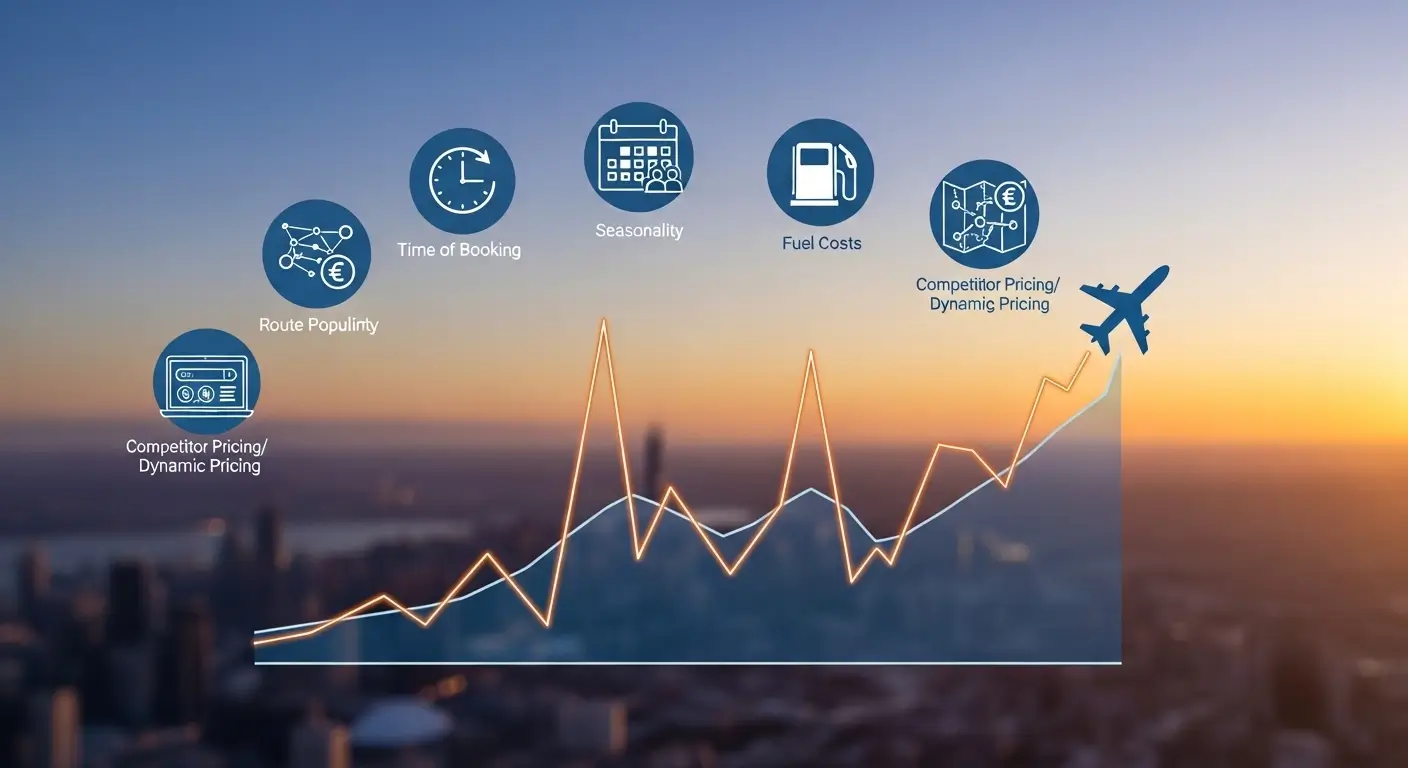
Flight prices change every hour because airlines use automated dynamic pricing systems that adjust fares based on seat availability, demand signals, competitor pricing, and time to departure not human decisions. A fare you saw this morning can increase by $40 tonight without any news, sale, or event triggering it.
Understanding why flight prices change is not about predicting the future it is about recognising patterns. Airlines have been doing this for over 30 years. The pricing logic is consistent enough that budget travellers who know the triggers can book at the right moment and save 20–45% on the same route, same airline, same week.
Reason 1: Airline Dynamic Pricing Algorithms Run 24/7
The direct answer: Airlines do not set prices manually. Automated yield management systems reprice seats hundreds of times per day based on real-time data inputs.
Every major airline Emirates, Qatar Airways, British Airways, Turkish Airlines, Air Arabia uses a revenue management system (RMS) that monitors:
- How many seats remain in each fare class (Y, B, M, Q, K, etc.)
- How fast seats are selling compared to the historical pace for that flight
- What competing airlines are charging on the same route right now
- How many days remain before departure
When the system detects that bookings are moving faster than predicted, it automatically closes the cheaper fare buckets and opens higher ones. This happens without any human approving a price change. The result: you refresh a flight page and the price has jumped $30 in 20 minutes.
What this means for you: Never assume a price will stay the same while you “think about it.” The algorithm is not waiting.
Reason 2: Seat Inventory Is Bucketed
The direct answer: Airlines divide each cabin into multiple fare buckets. As lower buckets fill up, you automatically pay more even on the same flight.
Most travellers think of a flight as having one economy price. In reality, a single economy cabin on a London–Dubai flight may have 8–12 fare buckets, each priced differently:
| Fare Bucket | Typical Price Range | Seats Available | Restrictions |
|---|---|---|---|
| Q / K (lowest) | PKR 40,000 – 55,000 | 2–4 seats | Non-refundable, no changes |
| M / L | PKR 58,000 – 72,000 | 6–8 seats | Minimal flexibility |
| B / H | PKR 78,000 – 95,000 | 10+ seats | Some change fees |
| Y (full fare) | PKR 110,000+ | Always open | Fully flexible |
When the 4 cheapest seats sell, the price doesn’t go up you simply move to the next bucket. This is why a flight that showed PKR 48,000 yesterday now shows PKR 67,000. The flight is the same. The bucket changed.
Booking tip: When you find the lowest price, book it. Those 2–4 seats in the cheapest bucket disappear fast, especially within 30–60 days of departure.
Reason 3: Competitor Fare Matching Happens in Real Time
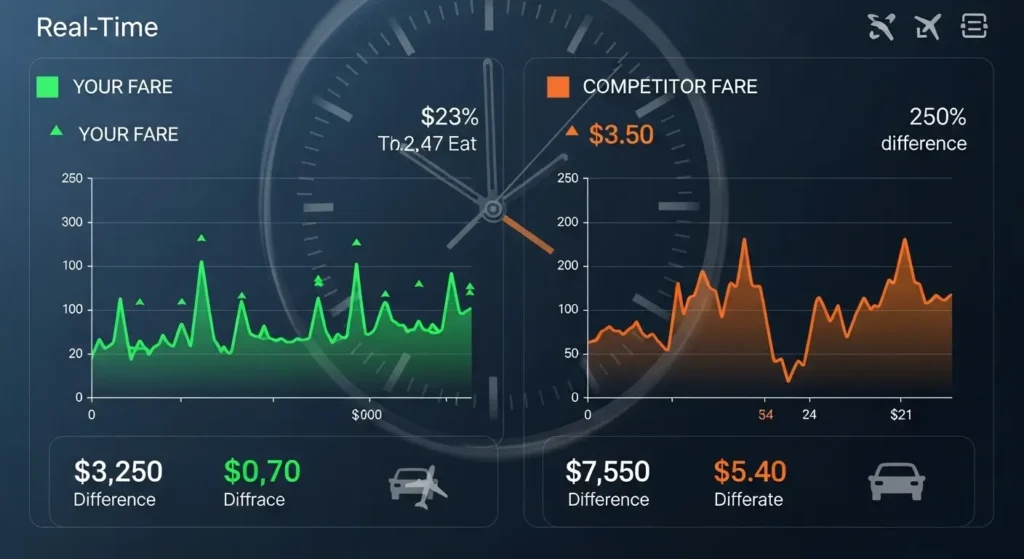
The direct answer: Airlines constantly monitor each other’s prices. When one airline drops a fare, others often match within hours and when one raises, others follow.
This is called competitive fare parity. Airlines subscribe to fare data feeds (through systems like ATPCO Airline Tariff Publishing Company) that update competitor pricing in near real time.
Practical example: If Air Arabia drops Lahore–Dubai to PKR 28,000, you may see FlyDubai, Emirates (economy saver), and Indigo adjust their prices within 2–6 hours. But when Air Arabia fills those seats and raises the price, the others often follow upward as well.
What this creates for the traveller: Short price windows. When you see a price drop on one platform, check 2 competing airlines immediately. That window may close by the time you check tomorrow.
Use a side by side platform check to catch these matching moments fast. Our Skyscanner vs Google Flights comparison breaks down which tool surfaces price drops faster and when each one gives you an edge.
Reason 4: Day of Week and Time of Day Affect Price
The direct answer: The old book on Tuesday rule is outdated and statistically unreliable in 2024–2025. But time of day still matters just not for the reason most blogs claim.
The Tuesday myth came from a period when airlines manually released sales on Monday nights. Today, that is not how it works. Airlines release promotional fares throughout the week with no fixed schedule.
What is more consistent:
| Timing Pattern | What Actually Happens |
|---|---|
| Midnight – 6 AM local airline time | Lowest search traffic = sometimes lower prices on unpopular routes |
| Friday evenings | Business travel demand peaks prices spike on popular routes |
| Sunday afternoon | Leisure search traffic peaks airlines hold or raise prices |
| 6–8 weeks before departure | Historically the lowest window for international routes |
| 3–7 days before departure | Last-minute unsold seats discount OR premium, unpredictable |
The real pattern: prices are lowest when demand is lowest not on a specific day of the week. For a data-backed breakdown of the exact booking windows that consistently deliver the lowest fares, see our guide on the best time to book cheap flights.
Reason 5: Search Behaviour Can Temporarily Inflate Prices

The direct answer: On some platforms, repeated searches for the same route can trigger higher displayed prices. This is a documented (and debated) pricing behaviour.
This is more consistently observed on airline direct websites than on aggregators. The mechanism: cookies or session tracking detect that you have searched this route before, and the system may display a higher price to create urgency.
How to protect yourself:
- Use incognito/private browsing mode when searching flights
- Clear cookies between searches
- Use Google Flights (which pulls live GDS data and is less susceptible to session-based pricing)
- Compare the price shown on Skyscanner with the airline’s direct site before booking
This does not always happen, but it costs you nothing to search in private mode and it can save you 5–15% in inflated “urgency pricing.”
Reason 6: Flight Prices React to External Demand Signals
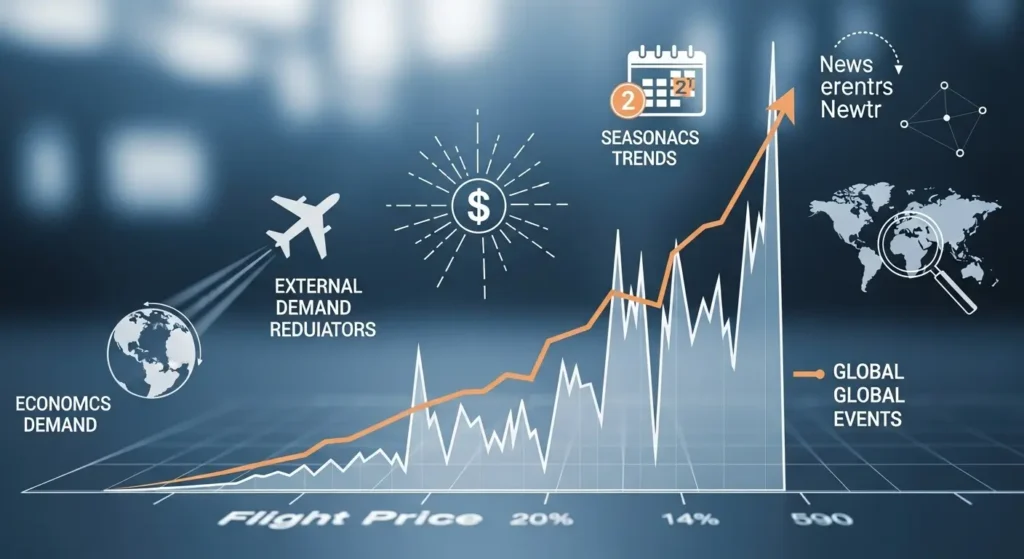
The direct answer: Events, school holidays, public holidays, and even news stories cause demand spikes that push prices up within hours.
Airlines and OTAs (online travel agencies) monitor booking velocity in real time. When a surge in searches hits triggered by a public holiday announcement, a viral social media post about a destination, or school term end dates the algorithm reads this as rising demand and adjusts fares upward automatically.
Real patterns to know:
- Eid holidays (Pakistan): Lahore–Dubai, Karachi–London, and Islamabad–Toronto fares typically rise 30–60% starting 8–10 weeks before Eid. They peak 3–4 weeks before.
- Summer school holidays: European routes from Pakistan spike from April onward. Book February–March for June–August travel.
- Flash sales: Airlines release these for 24–72 hours to fill unsold inventory. These are not algorithm-driven they are human marketing decisions and represent genuine discounts.
Internal link: Learn how to find flash sales and limited time deals in our guide to cheap flight booking tips.
Reason 7: Currency Fluctuations and Fuel Surcharges Cause Background Price Shifts
The direct answer: The price of oil and PKR/USD exchange rate changes cause airline base fares and surcharges to shift even on routes you are not watching.
Airlines price international fares primarily in USD. When the Pakistani Rupee weakens against the dollar, the PKR fare you see on local booking platforms rises not because the airline changed its price, but because the conversion rate changed.
Additionally, fuel surcharges (labelled YQ in your ticket breakdown) can change quarterly. In 2022–2023, fuel surcharges on long-haul routes from Pakistan increased by $60–$120 per ticket as oil prices rose. These charges are embedded in the fare and not always itemised clearly.
What to do: If you are watching a fare in PKR and the rupee is weakening, book sooner. A $10 increase in fuel surcharge or a 2% currency move can cost you PKR 2,500–5,000 on a long-haul ticket.
Decision Table: When to Book vs When to Wait
| Your Situation | Best Action | Expected Saving | Risk |
|---|---|---|---|
| Travel is 8–12 weeks away, flexible dates | Book now at first reasonable price | 15–30% vs peak | Low |
| Travel is 4–6 weeks away | Book immediately | 10–20% | Low-Medium |
| Travel is 2–3 weeks away | Book today do not wait | 0–10% | Medium-High |
| Travel is under 7 days | Book if price is acceptable no predictability | Variable | High |
| Peak season (Eid, summer) | Book 10–14 weeks ahead | 30–50% | Very Low |
| Off-peak travel | More flexibility; monitor for 1–2 weeks | 20–35% | Low |
Platform Comparison: Where to Actually Book
| Platform | Best For | Pricing Transparency | Fare Accuracy | Best Feature |
|---|---|---|---|---|
| Google Flights | Research, date comparison, alerts | High | High | Calendar view, price graph |
| Skyscanner | Multi-airline comparison | High | High | Everywhere search, fare alerts |
| Kayak | Bundled deals, hotels+flights | Medium | Medium | Price forecast tool |
| Airline Direct Site | Final booking after finding price | High | Exact | Avoid OTA markup, direct support |
| Wego (popular in Pakistan) | Regional routes, local currency | Medium | Medium | PKR pricing, local payment methods |
Recommended workflow:
- Search on Google Flights to understand the price range and best dates
- Cross-check on Skyscanner for alternative airlines
- Book directly on the airline website or a trusted OTA to avoid hidden fees
Step by Step: How to Book at the Lowest Price
Step 1 Define your date flexibility If you can shift your travel by 2–3 days, you unlock significantly cheaper fare buckets. Use Google Flights’ calendar view to find the cheapest departure day.
Step 2 Set a price alert immediately On Google Flights or Skyscanner, set a price alert for your route the moment you start searching. This captures any sudden drops without requiring you to refresh manually. If you want to get the most out of Skyscanner’s alert and filter features, our Skyscanner tips to save money on flights guide covers 12 tricks most travellers miss.
Step 3 Search in incognito mode Open a private/incognito browser window every time you search. This eliminates session-based pricing inflation.
Step 4 Check the airline directly after finding your price Once Skyscanner or Google Flights shows you a good fare, open the airline’s website directly in a new incognito tab. Sometimes the direct price is 3–8% lower (no OTA commission markup).
Step 5 Read the fare rules before buying The cheapest fare bucket is almost always non-refundable and non-changeable. Know this before you book. If your travel plans are uncertain, weigh the cost of a slightly higher flexible fare against the risk of losing the full ticket amount.
Step 6 Book by credit card for chargeback protection Always pay by credit card. If the airline cancels, delays, or changes your flight significantly, you have chargeback rights that debit card and bank transfer payments do not provide.
For a full breakdown of hidden fees to avoid, read our guide to airline baggage rules and hidden charges.
Mistakes Travellers Make That Cost Them Money
Most travellers overpay not because they are unlucky but because they follow habits that made sense 10 years ago. Here are the most common and costly:
Mistake 1: Waiting for a better price without a logic-based trigger Prices do not drop on a schedule. If you are waiting to see if it gets cheaper, you need a reason like an upcoming flash sale window or confirmed off-peak travel. Waiting without a strategy usually means paying more.
Mistake 2: Booking round-trip automatically Sometimes two one-way tickets on different airlines are cheaper than one round-trip. Always check both options, especially for routes with multiple carriers. Read more in our flight booking tips guide.
Mistake 3: Only searching on one platform Platform exclusivity deals, OTA partnerships, and display biases mean one platform will show you different prices than another. A 10-minute cross-check across Google Flights + Skyscanner + airline site can save PKR 8,000–20,000 on an international ticket.
Mistake 4: Ignoring nearby airports If you are flying from Lahore, check Islamabad and Karachi fares too. On Gulf routes especially, pricing differences between Pakistan departure cities can be PKR 10,000–25,000 on the same airline.
Mistake 5: Assuming the cheapest flight has no hidden costs A PKR 42,000 fare with no checked baggage can become PKR 58,000 after adding a 23kg bag at the airport. Always calculate total cost fare + baggage + seat selection + meals before deciding. See our full guide to airline baggage policies.
Conclusion
Flight prices don’t change randomly they are driven by real time data, demand signals, and airline revenue strategies. From seat availability and booking patterns to competitor pricing and seasonal demand, every factor plays a role in how fares move. What looks like hourly fluctuation is actually a constant optimisation process where airlines try to maximise profit while filling seats efficiently. If you understand these triggers, you stop guessing and start booking with strategy.
The practical takeaway is simple: timing alone is not enough behaviour matters. Searching repeatedly, delaying bookings, or ignoring demand trends can cost you more. Instead, track routes, compare options, and book when prices align with demand patterns rather than waiting for a perfect moment. Flight pricing is dynamic by design, and the advantage goes to travellers who understand how the system works, not those who chase it blindly.
FAQs
Why did my flight price increase while I was on the booking page?
The fare bucket you were viewing sold out during your session. Airlines process thousands of bookings simultaneously. By the time you reached the payment page, another buyer completed their purchase and the remaining seats moved to a higher bucket. Complete your booking in one session without switching tabs.
Is it cheaper to book flights at midnight?
Not reliably. The midnight timing advice comes from the era of manual airline pricing. Modern RMS systems run 24/7. However, late night searches on unpopular routes occasionally show slightly lower prices because search volume is low and the algorithm is not registering high demand. It is worth checking, but it is not a reliable strategy.
Do flight prices drop closer to departure?
Sometimes but the risk is high. Airlines discount unsold inventory for some routes within 7 days of departure. But on popular routes (e.g. Pakistan–Gulf during Eid, or Pakistan–UK in summer), last-minute prices are often 40–80% higher than they were 6–8 weeks before. Last-minute is a valid strategy only for flexible travellers on less competitive routes.
Why is the same flight cheaper on Skyscanner than the airlines website?
OTAs sometimes have promotional agreements with airlines that allow them to display lower fares temporarily. However, this is not always the case and sometimes the airline’s own site is cheaper. Always compare both. When OTA and airline prices are within PKR 1,000–2,000, book directly with the airline for better customer service and fewer issues with changes or cancellations.
Does searching a flight too many times make it more expensive?
It can on some airline websites due to session or cookie based dynamic pricing. Use incognito mode and clear cookies between searches to avoid this. Aggregators like Google Flights are generally not affected by this because they pull fares from a central GDS database.
What is the cheapest day of the week to fly?
For most international routes from Pakistan, Tuesday and Wednesday departures tend to be cheaper than Friday, Saturday, and Sunday. This is because business and leisure demand peaks on weekends. However, this varies by route always check the Google Flights calendar view for your specific route to see the actual pricing pattern rather than relying on generalisations.