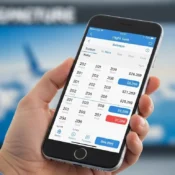

Flight ticket prices are controlled by dynamic pricing algorithms not set manually. Airlines adjust fares hundreds of times per day based on demand, booking timing, competition, seasonality, and traveller behaviour. The traveller who books at the right time on the right platform pays 20–50% less than someone booking on impulse.
The 9 key factors that directly affect flight prices are booking timing, travel dates, demand and seasonality, route competition, seat class and availability, day of departure, airline pricing algorithms, baggage and fee structures, and the booking platform you use. Each factor is controllable if you know what to look for.
In This Guide
- Booking Timing How far in advance should you actually book?
- Travel Dates Which days are cheapest to fly?
- Demand & Seasonality Peak vs. off peak price difference
- Route Competition Why some routes are always expensive
- Seat Class & Cabin Availability How fare buckets work
- Day of Departure The Tuesday myth, debunked
- Airline Pricing Algorithms What they track about you
- Hidden Fees & Baggage Rules The real price you pay
- Booking Platform Which tool gives the best price
47%
avg. price increase in the final 2 weeks before departure
3–4x
fare variation between peak and off-peak season on popular routes
$60–$120
typical hidden fee gap between advertised and final ticket price
6–8 wks
domestic sweet-spot booking window for lowest average fares
1. How Far in Advance You Book
Bottom Line
For domestic flights, book 6–8 weeks out. For international, target the 2–5 month window. Booking too early or too late both cost you more.
Booking timing is the single most controllable factor affecting flight prices. Airlines use a tiered pricing model called fare class inventory. The cheapest seats labelled in systems as Y, B, M, Q, etc. are released early and in limited quantity. Once those buckets empty, the price automatically jumps to the next tier.
The book months in advance advice is partially correct, but the data shows a nuance: prices often dip again around 4–6 weeks before departure as airlines try to fill remaining seats. This is your second buying window especially reliable on routes served by budget carriers.
Common Mistake
Booking 10–12 months in advance for international travel is rarely optimal. Airlines haven’t yet adjusted prices based on demand signals. You’re paying a premium for certainty, not value.
| Booking Window | Domestic Flights | International Flights | Price Impact | Best Strategy |
|---|---|---|---|---|
| Less than 2 weeks out | Very High | Extremely High | +40–80% | Last resort — use flexible dates to reduce cost |
| 2–4 weeks out | High | High | +20–40% | Look for budget carrier deals or error fares |
| 4–8 weeks out (domestic sweet spot) | Best | Moderate | Lowest average domestic fares | Set price alerts 2 weeks before this window |
| 2–5 months out (intl sweet spot) | Slightly higher | Best | Lowest average international fares | Compare across platforms, book mid-week |
| 6–12 months out | Moderate | Moderate | Unpredictable neither cheap nor expensive | Only book if schedule is fixed and it’s a hot route |
For a deeper breakdown, read our guide on best time to book flights with route specific data.
2.Your Travel Dates

Bottom Line
Flying Tuesday, Wednesday, or Saturday consistently produces cheaper fares than flying Friday or Sunday. The difference can reach $80–$150 on popular routes.
Airlines price based on demand, and demand is highly predictable by weekday. Business travellers dominate Monday and Friday flights, pushing prices up on those days. Leisure travellers cluster around Fridays and Sundays, creating a second demand spike. Tuesday, Wednesday, and Saturday flights carry lower demand airlines discount them to fill seats.
The Tuesday myth is partially real but frequently overstated. The pattern that airlines drop fares on Tuesday afternoons (when competitors match weekend sale prices) still exists but is increasingly unreliable. Modern pricing tools reprice flights within minutes. What’s more reliable: searching on Tuesday or Wednesday for the cheapest available fares, which happen to index lower due to demand patterns not because airlines are running a sale. For a route-by-route breakdown of when pricing actually dips, read our full data analysis on the cheapest day to book flights it breaks the myth wide open with real booking patterns.
Cheapest vs Most Expensive Days to Fly
- Cheapest: Tuesday, Wednesday, Saturday
- Most expensive: Friday, Sunday, Monday
- Holiday exceptions: These rules break around Thanksgiving, Christmas, and school holiday periods demand overrides day-of-week patterns entirely.
- Red-eye flights: Departures between 10pm–5am typically price 10–25% below peak-hour equivalents on the same day.
3.Demand, Seasonality, and Peak Travel Periods
Bottom Line
Demand is the most powerful price driver. Flying 2–3 weeks outside peak season can cut your fare by 30–60% on the same route.
Every route has a demand cycle. Airlines model this from years of booking data and pre-price seats accordingly. Summer transatlantic flights are expensive not because of fuel costs they’re expensive because millions of people want to fly at the same time.
The practical opportunity is in shoulder season travel the weeks immediately before and after peak periods. Prices drop sharply, weather is often still excellent, and airports are less crowded. For European travel, this means mid-May (before school summer breaks) and late September. For Southeast Asia, it means avoiding December–February and traveling in April or October instead.
| Season Type | Typical Fare Level | Best For | Booking Strategy |
|---|---|---|---|
| Peak season (Jul–Aug, Dec–Jan) | Highest | Unavoidable family travel | Book 4–6 months ahead, set price alerts |
| Shoulder season (May, Sep–Oct) | 20–40% below peak | Best overall value travelers | Book 6–10 weeks ahead prices are stable |
| Off-peak (Jan–Feb, Nov) | Lowest fares | Flexible budget travelers | Compare 6–8 weeks out; last-minute deals more likely |
| Holiday windows (Thanksgiving, Easter) | Surges +50–100% | Must-travel situations | Book 3–5 months out; no benefit to waiting |
See how demand affects specific routes in our cheap flight booking tips guide.
4.Route Competition and Market Structure
Bottom Line
Routes with more competing airlines are dramatically cheaper. A single-carrier monopoly route can price 2–3x higher than an equivalent-distance competitive route.
Route competition is one of the least understood factors among travellers but it’s one of the most impactful. On routes where 3+ airlines compete directly, pricing pressure keeps fares low. On thin routes served by one carrier, or hub-to-hub routes where only legacy carriers operate, fares are structurally inflated.
The low-cost carrier effect is real and measurable. When a budget airline like Ryanair, Southwest, or IndiGo enters a new route, average fares on that route drop by 20–40% industry-wide within months. When they exit, prices rebound.
How to Use Route Competition to Save
- Use nearby airports: A hub 60 miles away may have far more competition check both. NYC travellers can compare JFK, LGA, and EWR; London travellers should compare LHR, LGW, STN, and LTN.
- Consider one-stop routing: Sometimes flying A C B is cheaper than the direct A B, because legs A C and C B each have high competition.
- Use Google Flights “Explore” map: It shows you which destinations are cheap from your origin the cheapest are often the most competitive routes.
5.Seat Class and Fare Bucket Availability
Bottom Line
Two people on the same flight in the same row may have paid radically different prices. Fare buckets not the cabin class determine what you pay.
Every airline seat is sold through a system of fare buckets (also called booking classes). Economy cabin alone can have 8–12 different fare classes, each with different prices, refund policies, and upgrade eligibility. The cheapest bucket (often labelled Q or L) may have only 2–4 seats available.
When cheap buckets are gone, the system automatically moves to the next tier often $50–$150 higher. This is why checking the same flight across multiple days matters: demand on, say, a Thursday flight might mean cheap buckets sold out fast, while the same route on Tuesday still has them available.
Practical Fare Class Insight
- Basic Economy (cheapest bucket): No seat selection, no changes, often no carry-on. Great for solo short-haul, but understand the restrictions before booking.
- Standard Economy (mid bucket): Usually includes seat selection and one change fee. The value-for-flexibility sweet spot for most travelers.
- Flexible Economy (top bucket): Fully refundable, priority boarding, upgrade-eligible. Often 60–80% of business class prices but less than business class perks.
Understand the full picture in our airline baggage rules and fare class breakdown guide.
6.Time of Day and Departure Slot

Bottom Line
Early morning (5am–7am) and late-night (10pm+) flights are consistently 10–25% cheaper than peak midday and after-work departures.
Airlines price high-demand departure slots at a premium. The 7am–9am and 4pm–7pm windows are the most popular for business and leisure travellers alike. Flights that depart before most people want to wake up or after they want to travel carry lower demand and lower prices to match.
Red-eye flights on long-haul international routes offer a secondary benefit beyond price: they’re a natural way to sleep on the plane, arrive rested, and gain a full travel day at your destination.
7.Airline Pricing Algorithms and Dynamic Pricing
Bottom Line
Airlines use machine learning to price seats based on your search history, device type, loyalty program status, and booking urgency signals. Clearing cookies or using incognito mode can help.
Modern airline pricing is driven by revenue management systems (RMS) sophisticated algorithms that process millions of data points daily. These systems consider: current booking pace, historical demand for the same route and date, competitor pricing in real-time, how many times an IP address has searched the same route, and even time-of-day search patterns.
What this means for you: Repeatedly searching the same route without booking can trigger scarcity signals — some systems will show you higher prices on return searches. This is not universal, but it is documented. The safest approach: search in private/incognito mode, use multiple platforms for comparison, and don’t wait to book once you see a price you’re comfortable with. To understand exactly how these systems reprice throughout the day, see our deep dive on why flight prices change daily it shows the specific triggers that push fares up and the windows where they reliably dip.
Price Watch Reality
Price alerts are useful, but algorithms can spike prices temporarily before returning to normal. A price that jumped $100 today may drop back in 48 hours or it may not. Don’t wait for perfection; book within 15–20% of the lowest price you’ve seen.
8.Hidden Fees, Baggage Rules, and Ancillary Costs
Bottom Line
The advertised fare is rarely the real price. Baggage, seat selection, and change fees can add $60–$200+ to a cheap ticket. Always calculate total trip cost before booking.
Budget airlines have perfected the art of advertising ultra-low base fares while recovering margin through ancillary fees. A €29 Ryanair fare can become €90+ once you add a checked bag, seat selection, and airport check-in. Spirit Airlines consistently ranks among the cheapest base fares in the US and often among the most expensive once you add bags.
This doesn’t make budget airlines bad value it means you must compare total cost, not just headline price. A traveller with only a personal item and flexible dates will genuinely save with a budget carrier. A family with two checked bags might find the legacy carrier “expensive” ticket is actually cheaper all-in.
| Fee Type | Budget Carrier (avg) | Legacy Carrier (avg) | Decision Factor |
|---|---|---|---|
| Carry-on bag | $30–$65 (often charged) | Usually included | Critical for budget airline comparison |
| First checked bag | $35–$70 | $30–$45 (or free with card) | Verify before booking |
| Seat selection | $8–$50 | $0–$30 (basic often free) | Can skip and take random assignment to save |
| Flight change fee | $75–$200 or no changes | $0–$200 (varies by fare class) | Buy flexible fare if plans may change |
| Airport check-in | $25–$55 (if available) | Free | Always check in online with budget carriers |
Get the full breakdown in our airline baggage rules guide before you book. Also review our flight cancellation policies page to understand your protection rights.
9.The Booking Platform You Use
Bottom Line
No single platform has the lowest price on every route. The right workflow is: research on Google Flights or Skyscanner, then book directly on the airline site to avoid OTA surcharges.
Different booking platforms have different airline contracts, display different fare classes, and charge different service fees. A fare that appears on Expedia may not match what you see on Kayak or directly on the airline even for the identical flight.
Online Travel Agencies (OTAs) are excellent for discovery comparing routes, dates, and prices across dozens of airlines simultaneously. But they sometimes add service fees on top of the base fare, and booking through them can complicate customer service if there’s a disruption. The smart play: use OTAs to research and price-compare, then book direct with the airline once you’ve identified the best flight.
| Platform | Best For | Coverage | Price Accuracy | Extra Fees? |
|---|---|---|---|---|
| Google Flights | Research, date flexibility, price tracking | Excellent (most airlines) | High | None redirects to airline or OTA |
| Skyscanner | Flexible month/year view, budget airline discovery | Very broad (incl. many LCCs) | High | Minimal usually redirects to airline |
| Kayak | Tracking, deal alerts, hotel bundles | Good aggregates multiple sources | Moderate | Sometimes verify on airline site |
| Expedia / Booking.com | Bundle deals (flight + hotel) | Major carriers only | Variable | Often service/booking fees apply |
| Direct Airline Website | Best customer support, loyalty miles, exact fare details | Single airline only | Most accurate | None added |
| Hopper | Price prediction and “watch” functionality | Good for domestic US/Canada | Good | Low small booking fee |
Read our full comparison: how to find cheap flights using the right tools at the right time.
The 6-Step Smart Booking Method
Use these steps in order to apply all 9 factors and consistently pay less than the average traveller on any given route.
1.Use Google Flights to find your price floor
Open Google Flights, use the flexible date calendar, and identify the 2–3 cheapest departure windows for your route. This is your baseline any price within 15% of this is worth booking.
2.Check Skyscanner for low cost carriers Google misses
Some regional budget airlines don’t appear in Google Flights. Skyscanner has broader coverage, especially in Europe (Wizz Air, easyJet) and Southeast Asia (AirAsia, Cebu Pacific).
3.Calculate total cost including all fees
Add baggage fees, seat selection, and airport transfer costs before comparing. A $149 budget fare with $90 in bags beats a $199 legacy fare with bags included by $40 but not as much as the headline prices suggest.
4.Open an incognito window and search again
If you’ve been searching the same route for days, clear your cookies or use private browsing to eliminate any personalization effects before your final comparison.
5.Set a price alert for 5–7 days before booking
Use Google Flights or Hopper price tracking. If prices drop further, capture the saving. If they rise, you’ve confirmed your target price is fair and book immediately.
6.Book directly on the airline’s website
Once you’ve identified the best flight using comparison tools, go to the airline’s own website to book. You avoid OTA fees, get direct customer support, earn loyalty miles, and have cleaner records for any disruption claims.
Compare Flights Before Prices Increase
Prices on popular routes can move by 20–40% in a single day. Use the search tools below to find your lowest fare then book direct. Find Cheap Flights Now
Also read: Best time to book flights · Booking tips · Baggage rules
Frequently Asked Questions
What is the cheapest day of the week to book a flight?
There is no single guaranteed cheapest day, but Tuesdays and Wednesdays produce lower average fares on most routes due to lower demand from both business and leisure travelers. The more reliable strategy is to use flexible date tools on Google Flights or Skyscanner and compare the ±3 day window around your preferred travel date this consistently finds 10–20% cheaper alternatives.
How far in advance should I book a flight to get the cheapest price?
For domestic flights, the optimal booking window is 6–8 weeks before departure. For international flights, target 2–5 months out. Both windows represent the sweet spot where cheap fare buckets are still available but demand hasn’t yet driven a broad price increase. Booking too early (6+ months) often means paying a premium before airlines have demand data to calibrate prices accurately.
Are last minute flights ever cheaper than booking in advance?
Yes, but unpredictably. Airlines sometimes discount unsold seats 1–3 days before departure, particularly on leisure routes. This is more common with low-cost carriers and on routes where the flight is undersold. It’s a viable strategy only if you have complete flexibility no fixed plans, no hotel booked, no tight schedule. For most travellers, counting on last-minute deals is a gamble that more often costs more than it saves. See our cheap flight booking tips for when to use this tactic.
Why does the same flight show different prices on different websites?
Airlines distribute fares through different channels direct website, Global Distribution Systems (GDS), and API agreements. Each channel can access different fare classes. OTAs (Expedia, Kayak) may also add service fees. Additionally, your search history and browser cookies can affect what price is displayed. Always compare at least 3 sources and use incognito mode for final checks before booking.
Do flight prices really go up after you search multiple times?
This is partially true and partially myth. Some airline and OTA websites do use dynamic display pricing that can show higher prices based on repeated searches from the same IP or browser. However, the effect is inconsistent and platform specific it’s more documented on hotel sites than airline sites. To eliminate risk, search in incognito mode when you’re ready to book. If you see a price change after multiple searches, open a private window and search again the original price often returns.
When should I NOT book flights far in advance?
Booking far in advance is less advantageous on routes with heavy competition from budget carriers (prices stay low close to departure), during off peak travel periods (surplus capacity means prices don’t spike), and when your travel plans are uncertain (change fees may cancel out any savings). The flight cancellation policy of the fare class matters here fully refundable fares lose the early booking advantage entirely.
Related Guides on Flightofly
- Best time to book flights Route-specific data on optimal booking windows
- Cheap flight booking tips 15 tactics to reduce your fare on any route
- How to find cheap flights A complete platform-by-platform guide
- Airline baggage rules Every major airline’s carry-on and checked bag policy
- Flight cancellation policies What you’re owed and how to claim it
Sources & Methodology: Pricing patterns referenced in this article are derived from publicly available industry data, airline revenue management research, and aggregated booking pattern analysis across major route types. Specific fare windows and savings percentages represent averages observed across multiple routes and seasons individual results will vary by route, airline, and travel period. Always verify current fares using the comparison tools recommended above.