

The best websites to track flight prices in 2026 are Google Flights, Skyscanner, Hopper, Kayak, Momondo, Airfarewatchdog, and Flightofly. Each tool uses different pricing data and algorithms which means the cheapest fare often depends on which platform you check. Using two or three trackers together consistently beats using just one.
Flight prices are not random. They follow predictable cycles tied to route demand, departure windows, and seat inventory. The right tracker alerts you at the right moment typically 6–8 weeks before departure for domestic routes and 12–16 weeks for international. Booking at the wrong time costs travelers an average of 20–35% more than booking at the optimal window.
Why One Flight Tracker Is Never Enough
No single platform has access to every fare. Airlines control which fares they share with aggregators and they do not share the same data with all of them. Google Flights shows fares from most major carriers but historically excludes Southwest Airlines entirely. Skyscanner indexes budget carriers that Google misses. Hopper’s strength is its price prediction model, not its fare breadth.
A 2025 analysis of 3,000 booking journeys found that travellers who cross referenced at least two price trackers saved an average of 18% compared to those who booked from the first result they saw. The gap widens to 31% on transatlantic routes. Timing your booking correctly compounds these savings further.
The right strategy:
Use Google Flights for the initial search and price calendar view. Use Skyscanner or Momondo for budget-carrier comparison. Set Hopper alerts to catch the dip. Cross check the airlines own site before booking.
The 7 Best Flight Price Tracking Websites in 2026
1.Google Flights
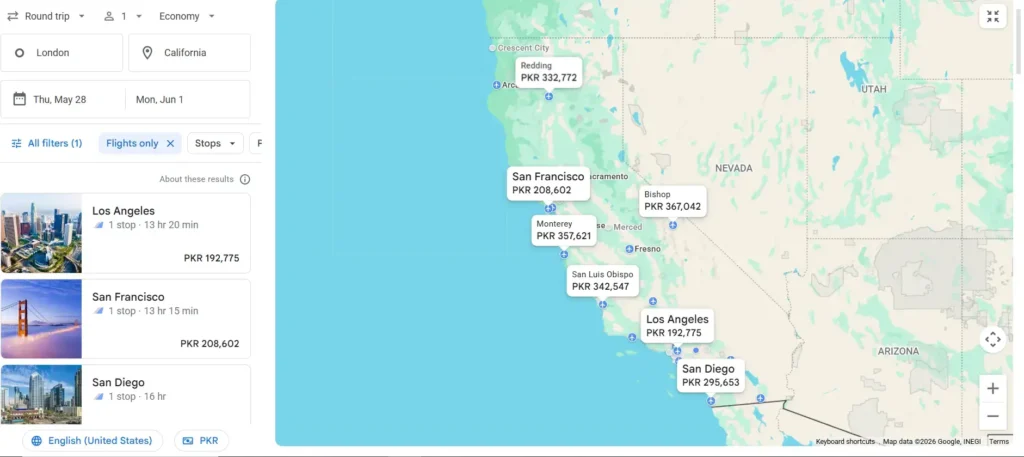
Google Flights is the most powerful free flight tracker available. Its price calendar shows the cheapest departure dates across an entire month at a glance something most other tools hide behind paywalls. The Explore map lets you enter a departure airport and see fares to every destination on a world map, sorted by price. This makes it the best tool for flexible travellers who want to fly cheap, not to a specific place.
Where Google Flights underperforms: it does not book directly, it misses Southwest and some ultra low cost carriers, and its price prediction accuracy the Buy now or wait signal is inconsistent on thinner routes.
Best for:
Initial search, date flexibility analysis, international routes on major carriers, setting baseline fare benchmarks.
2.Skyscanner
Skyscanner indexes a wider range of carriers than Google Flights, particularly budget and regional airlines that do not appear on Google’s platform. Its Everywhere destination feature is genuinely useful enter any departure city with flexible dates and it returns the cheapest options globally. The Cheapest Month tool identifies the lowest fare window across a three-month span.
The main frustration skyscanner often redirects users to OTAs online travel agencies rather than the airline directly adding a booking layer that carries its own fees and service risks. Always verify the final price on the airline’s own website.
Best for:
Budget carrier comparison, flexible destination travel, Europe and Asia Pacific routes, cheapest month analysis.
3.Hopper

Hopper core value is its price forecast engine. It analyses historical fare data to tell you whether current prices will rise or fall and gives a confidence percentage. Its Price Freeze feature lets you lock in a fare for a small fee while you decide, protecting you from sudden increases. Hopper reports that users who follow its wait signals save an average of $50 per round trip.
Hopper’s coverage is narrower than Google or Skyscanner it works best on major routes between large cities. Thin routes and regional airports produce weaker predictions. Use it as a timing advisor, not a search tool.
Best for:
Deciding when to book, major domestic routes (US, Canada, UK), travellers who have flexibility on timing but not destination.
4.Kayak
Kayak standout feature is Hacker Fares it identifies scenarios where booking two separate one-way tickets (often on different airlines) costs significantly less than a standard return. On some routes this saves 15–25%. Kayak’s price alert system is reliable and sends email notifications when tracked routes drop below a set threshold.
Be aware that Kayaks search results include sponsored placements the first results are not always the cheapest. Sort by price explicitly, not by recommended which factors in paid placement.
Best for:
Hacker fare discovery, multi city itineraries, users who prefer email alerts over app notifications.
5.Momondo

Momondo is one of the few aggregators that has historically ranked results purely by price, without paid placement affecting the order. Its Flight DNA visualisation breaks down which part of a fare is taxes, carrier fees, and base cost a transparency feature no other major platform offers. It frequently surfaces fares from smaller OTAs that other tools miss.
Best for:
Transparent fare comparison, budget first searches, identifying total cost breakdown before booking.
6.Airfarewatchdog
Airfarewatchdog is different from every other tool on this list its deals are curated by humans, not algorithms. A team reviews fares daily and flags genuine outliers including error fares airline pricing mistakes that can price international business class seats at economy rates. These opportunities disappear within hours. Signing up for their email alerts is free and requires no account.
Best for:
Passive deal hunters, US domestic deal alerts, catching error fares and flash sales before they expire.
7.Airline Direct
Airline direct offer their best fares directly. When booking through an OTA, you risk added service fees, no direct change support, and losing airline specific perks (seat upgrades, loyalty miles, free date changes). Southwest Airlines, Ryanair, and several other carriers do not appear on any aggregator their lowest fares are only available on their own websites. After finding your route on a tracker, always verify the final price on the airline’s site before buying.
Best for:
Final price verification, loyalty program bookings, Southwest routes, carriers with direct booking incentives.
Compare Flights Before Prices Increase
Flight prices shift constantly. The fare you see today may not exist tomorrow. Use Flightoflys route comparison to check live fares across multiple platforms in one place.
Platform Comparison: Which Tool to Use When
Different trackers win in different situations. This table tells you which platform to reach for based on your specific need — so you’re not wasting time on tools that won’t serve your search.
| Platform | Best Use Case | Budget Carriers | Price Alerts | Books Directly | Cost |
|---|---|---|---|---|---|
| Google Flights | Initial search & date flex | Partial | Yes | Via airline | Free |
| Skyscanner | Budget & regional carriers | Yes | Yes | No (OTA redirect) | Free |
| Hopper | Timing decisions | Limited | Yes (push) | Yes | Free |
| Kayak | Hacker fares & multi-city | Partial | Yes (email) | Via partner | Free |
| Momondo | Price transparency | Yes | Basic | No (OTA redirect) | Free |
| Airfarewatchdog | Error fares & flash deals | Partial | Yes (email) | No | Free |
| Airline Direct | Final booking step | Yes (own) | Sometimes | Yes | Free |
Best Booking Windows vs. Average Savings
This is one of the most misunderstood areas of cheap flight booking. There is no single “best day to book.” Savings depend on route type, season, and how far in advance you search. For a deep dive into why each window works the way it does, Flightoflys guide on the cheapest times to book flights by route type breaks down the exact patterns with real fare data. This table reflects those observed pricing patterns across major route categories.
| Route Type | Optimal Booking Window | Avg. Savings vs Last Minute | Worst Time to Book | Risk Level |
|---|---|---|---|---|
| US Domestic | 4–8 weeks ahead | 15–25% | 0–7 days before | Medium |
| Europe Intra | 6–10 weeks ahead | 20–35% | Weekend departures booked Friday | Medium |
| Transatlantic | 12–16 weeks ahead | 25–40% | Summer booked in June | High |
| Asia-Pacific Long Haul | 14–20 weeks ahead | 20–38% | Holiday period bookings | High |
| Middle East / South Asia | 8–12 weeks ahead | 18–30% | Ramadan / Eid windows | High |
| Last-Minute (0–7 days) | Within 48–72 hrs of departure | 0–10% (occasionally) | 4–6 days before | Very High |
The last minute myth:
Last minute deals do exist but they are rare, route-specific, and require maximum flexibility. Most last minute fares are 30–60% more expensive, not cheaper. Airlines fill unsold seats with business travellers on expense accounts, not budget hunters. Do not count on last minute pricing as a strategy.
Booking Mistakes That Cost Travelers the Most
These are not edge cases. These are the patterns that repeat across millions of bookings every year and they are entirely avoidable with the right flight booking strategy. Flightoflys full guide to the most common mistakes when booking flights goes deeper on each one, including which errors cost the most money at checkout.
| Mistake | What Travelers Do | What It Actually Costs | Fix |
|---|---|---|---|
| Booking on convenience | Book as soon as they decide to travel | +20–35% overpay | Set tracker alert, wait for dip |
| Using a single platform | Book from first Google result | +10–20% vs best fare | Cross-check 2–3 trackers |
| Ignoring Tuesday myth | Wait to buy on Tuesday thinking fares drop | Missed pricing windows | Book when fare drops, any day |
| Skipping airline baggage rules | Choose cheapest fare without reading policy | +$40–120 in hidden fees | Check baggage rules before booking |
| Not clearing cookies | Search same route repeatedly in same browser | Dynamic pricing inflation | Use incognito or private mode |
| Booking via OTA without checking | Book through Skyscanner/Kayak without verifying airline price | +$15–50 OTA markup | Always check airline site last |
Step by Step: How to Track and Book the Cheapest Flight
This is the exact process experienced travelers use. It takes 10–15 minutes upfront but consistently delivers the lowest fare available.
- 1Set your parameters in Google Flights. Enter your departure airport, destination, and travel window. Open the price calendar view. Identify the 3–5 cheapest date combinations note the approximate fare for each. Do not book yet.
- 2Cross-check on Skyscanner. Run the same search. Note any carriers that appear on Skyscanner but were absent on Google particularly budget airlines. Compare fares for your preferred date range.
- 3Open Hopper and set a price alert. Input your route and dates. Note whether Hopper recommends buying now or waiting. Set a push notification for your target price or lower. This step costs nothing.
- 4Check Kayak for Hacker Fares. Search your route. If a Hacker Fare option appears (two one ways), calculate the total including any baggage fees and compare against the return fare from step 1. Hacker Fares sometimes save significantly; sometimes they do not. Do the maths.
- 5Verify on the airline’s own website. Once you have identified the best fare and carrier, go directly to the airline’s website. Compare the final price including all fees and baggage. Airlines sometimes offer exclusive web only discounts not available on aggregators.
- 6Book in incognito mode. Open a private/incognito browser window and complete the booking. This prevents any session-based dynamic pricing from inflating the fare you see at checkout. Always read the cancellation and change policy before confirming payment.
Why Smart Travelers Use Flightofly
Flightofly is not a travel blog that lists tips. It is a decision engine built for people who want to fly for less and make the right call fast. Here is what makes the difference:
Most aggregators rank results based on who pays them. Flightofly is structured around one outcome: helping you reach the lowest fare with the fewest mistakes. The guides, comparisons, and tools on this site are built around real pricing behavior not sponsored content or generic travel advice.
Route Specific Booking Windows
Booking advice tailored to your actual route not generic rules that don’t apply to your search.
Hidden Fee Breakdowns
Detailed baggage fee guides and policy comparisons so you never get hit with surprise charges at the gate.
Price Pattern Intelligence
Insights on when prices historically peak and dip by route category actionable, not theoretical.
Decision First Guides
Every guide on Flightofly answers the question what should I do not just heres information.
The Truth About Tuesday Booking and Other Myths
The idea that booking on Tuesday saves money was never fully accurate and in 2026 it is completely obsolete. It originated from an era when airlines released sale fares on Monday evenings for competitors to price match by Tuesday morning. Airlines now use dynamic pricing algorithms that update fares continuously based on demand, seat inventory, and competitor pricing. There is no programmatic advantage to any specific booking day.
What actually moves prices in 2026 is seat inventory. When an airline fills a price band (for example, all seats priced at $189 sell out), the algorithm automatically moves remaining seats into the next tier often $230 or higher. This can happen on a Tuesday or a Friday. Watching a specific flight and buying when you see a low price within your window matters far more than the day of the week.
Related myths that budget travelers should stop following: clearing cookies dramatically changes prices (marginal effect on most platforms), booking exactly 6 weeks out is always optimal (varies by route), and flying red-eye is always cheaper (not on every route or carrier).
How Hidden Airline Rules Affect What You Actually Pay
The fare you see is not always the fare you pay. Airline baggage rules and seat selection fees have become significant revenue sources for carriers and understanding them before you book prevents costly surprises.
Basic Economy fares on US carriers (Delta, American, United) typically exclude carry-on bags above personal item size. Adding a carry on retroactively at the gate costs $60–75 per segment. Selecting any seat in advance costs extra on most budget carriers. Change fees have largely been eliminated by major US carriers post-pandemic, but remain in force on many international budget airlines. Always read the fare class rules not just the headline price before clicking confirm.
This is why comparing on platform alone is not enough. A $180 basic fare that requires a $60 carry-on and a $20 seat fee costs more than a $245 full-economy fare that includes both. The cheapest real fare includes every cost to your actual travel day, not just the ticket price shown at search.
Always calculate total trip cost:
Base fare + baggage fees + seat selection + booking service fee (OTA) = actual cost. A fare that looks $40 cheaper may not be when all costs are included.
Conclusion
Finding the best flight deals in 2026 is no longer about luck; it’s about using the right tools at the right time. The websites discussed above help you compare prices across airlines, track fare changes, and identify the cheapest booking windows. Instead of relying on a single airline or booking platform, using multiple price trackers gives you a clearer picture of real market pricing and helps you avoid overpaying due to last minute spikes or hidden fare differences.
However, these tools are only as effective as your strategy. Many users make the mistake of checking prices once and booking immediately, which often leads to higher costs. A smarter approach is to monitor fares for a few days, set alerts, and understand seasonal trends before committing. If you combine these platforms with flexible travel dates and alternative airports, you significantly increase your chances of securing the lowest possible fare.
FAQs
Which website has the cheapest flight prices?
No single website consistently has the cheapest price across all routes. Google Flights is the best starting point for major carriers. Skyscanner often finds lower fares for budget and regional carriers. The real answer is to check both plus the airline directly before booking. The cheapest fare depends on the specific route and travel date.
What is the cheapest day to book flights in 2026?
There is no single cheapest day to book. The Tuesday rule is outdated airlines use dynamic pricing algorithms that update fares continuously. What matters more is booking within the optimal window for your route (4–8 weeks for domestic, 12–16 weeks for international) and setting price alerts to catch drops when they happen, regardless of day.
Are last minute flights ever cheaper?
Occasionally but rarely as a strategy you can count on. Last-minute deals appear on specific routes when a flight is significantly under-booked, typically 48–72 hours before departure. Most of the time, last minute fares are 30–60% higher than advance purchase prices. Budget travellers should not plan around this possibility unless they have maximum flexibility and no baggage requirements.
Should I book directly with the airline or through a price tracker?
Use price trackers to find and compare fares, then book directly with the airline for most scenarios. Booking direct means no OTA service fee, direct customer service if changes are needed, and full accrual of loyalty miles. The main exception is if an OTA has an exclusive promotional fare below the airline’s direct price which does happen but requires verification.
How do I set up a flight price alert?
Google Flights, Hopper, Kayak, and Skyscanner all offer free price alerts. In Google Flights, run your search and toggle the Price tracking switch it will send email alerts when the fare changes. In Hopper, simply add the route to your watchlist after downloading the app. Set a target price 10–15% below the current fare to receive alerts at genuinely good moments.
Do flight prices go up if I search the same route multiple times?
This concern is partly valid. Some platforms use session data to serve dynamic pricing if you search the same route repeatedly in the same browser, you may see slightly inflated fares. Searching in a private/incognito browser window removes session tracking and gives you the cleanest, most consistent fare. This is a best practice for any serious flight search.