
The visa on arrival meaning is straightforward it is a travel authorization that eligible foreign nationals receive directly at an international port of entry, such as an airport or land border crossing, without needing to apply at a consulate or embassy before their trip. Instead of going through a lengthy pre-departure application process, travellers simply arrive at their destination, present required documents, pay a fee in most cases, and get stamped into the country on the spot.
This system is designed to make international travel faster and more accessible. It is especially useful for tourism, short business visits, and transit purposes. Visa on arrival is not available to all nationalities at all destinations, so checking eligibility before booking travel is essential.
Visa on Arrival
A visa on arrival (often abbreviated as VOA) is a type of entry permit issued to travelers upon reaching a foreign country. Unlike a traditional visa, which requires you to visit an embassy, submit documents, and wait for approval before traveling, a VOA is processed right at the border.
The key distinction is timing. With a regular visa, approval comes before you travel. With a visa on arrival, approval happens the moment you land or cross the border. This makes it a more flexible and traveler-friendly option when it is available.
It is also important not to confuse visa on arrival with visa-free entry. Visa-free means no visa of any kind is required. Visa on arrival still requires a visa, but the process happens at the destination rather than in your home country.
How Visa on Arrival Works
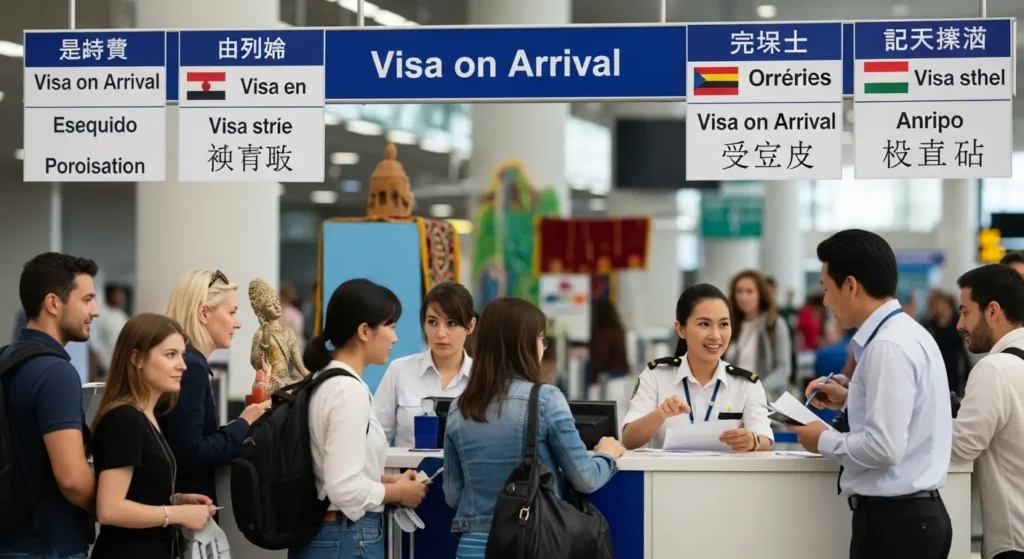
Before You Travel
Even though you apply at the destination, some preparation is still needed before you leave home. You should verify that your nationality is eligible for VOA at your intended destination. Requirements vary widely by country.
- Check your passport validity (most countries require at least 6 months of remaining validity)
- Prepare a recent passport photo (usually 1 to 2 copies)
- Have a completed arrival card or immigration form ready if required
- Carry proof of onward or return travel (a booked return flight)
- Have sufficient funds to cover your stay
- Prepare the exact visa fee in cash (many VOA counters do not accept cards)
At the Port of Entry
Once you land, you proceed to a dedicated Visa on Arrival counter, which is usually located before the main immigration desks. An immigration officer will review your documents, collect your fee, and issue a stamp or sticker in your passport.
The process usually takes between 10 and 45 minutes depending on the country and queue length. If you are flying through a busy international hub and have a connection to catch, it is worth understanding how international layover rules work so you can plan your time at the border accordingly. After receiving your VOA, you move to the regular immigration line for a final entry stamp.
Countries That Offer Visa on Arrival for Common Nationalities
| Country | Duration Allowed | Approximate Fee (USD) | Common Eligible Nationalities |
|---|---|---|---|
| Thailand | 30 days | $35 | Most nationalities (some exempted) |
| Egypt | 30 days | $25 | EU, US, UK, many others |
| Indonesia (Bali) | 30 days (extendable) | $35 | Many Asian and Western nationalities |
| Jordan | 30 days | $56 | Most Western passport holders |
| Maldives | 30 days | Free | All nationalities |
| Nepal | 15 to 90 days | $30 to $125 | Most nationalities except India |
| Sri Lanka | 30 days | $35 (ETA online) | Most nationalities |
Visa on Arrival vs Other Entry Types
| Entry Type | When Applied | Cost | Processing Time | Risk Level |
|---|---|---|---|---|
| Visa on Arrival | At destination border | Usually $25 to $60 | 10 to 45 minutes | Medium |
| Visa-Free Entry | No application needed | Free | Instant at immigration | Low |
| Prearranged Visa (Embassy) | Before travel | Varies widely | Days to weeks | Low |
| eVisa (Electronic Visa) | Online before travel | Usually $20 to $50 | 24 hours to 5 days | Low |
| Transit Visa | Before or at border | Free to low | Variable | Medium |
Key Rules and Conditions You Must Know
Visa on arrival comes with specific conditions that travelers must follow carefully. Violating these can lead to fines, deportation, or being barred from re-entry.
Stay Duration
Most VOA permits allow a stay of 15 to 30 days. Some countries allow extensions, but these must be processed before the original visa expires. Overstaying is a serious offense.
Purpose of Visit
Visa on arrival is typically issued for tourism, short business meetings, or transit only. Using it to work, study, or reside in a country is not permitted and can have serious legal consequences.
Port of Entry Restrictions
Not every entry point in a country may offer visa on arrival. Some countries only provide this service at specific international airports. If you are arriving early for an international flight and plan to use this time at the border, knowing how early to arrive at the airport for an international flight can help you avoid rushing through the VOA queue.
Passport Requirements
Your passport must typically have a minimum validity of 6 months beyond your intended stay. It also must have at least one or two blank pages for the visa stamp.
Real Examples and Travel Scenarios
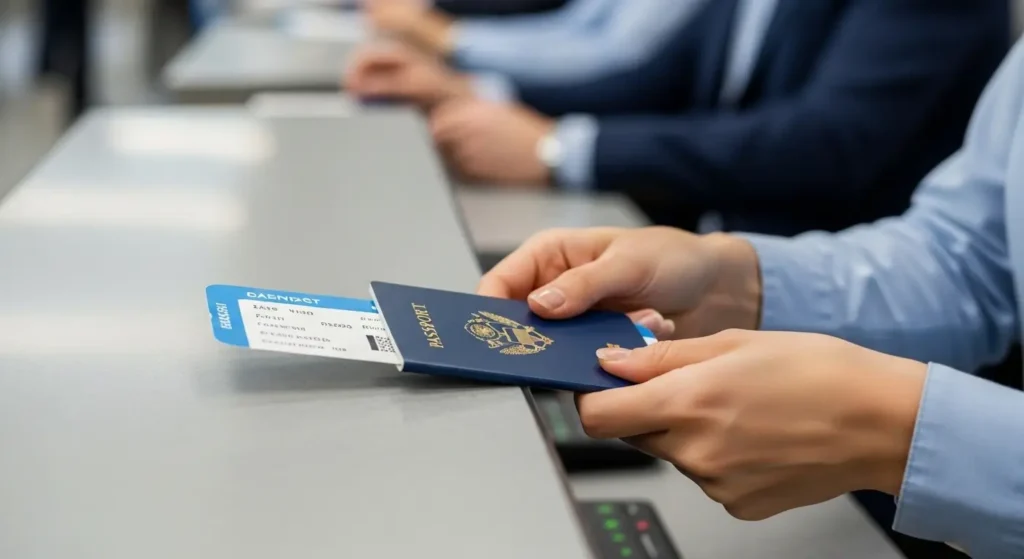
Scenario 1: A UK Traveler Visiting Thailand
A British passport holder flying into Suvarnabhumi Airport in Bangkok can obtain a visa on arrival for a 30-day stay. They pay the fee at the dedicated VOA counter, submit a passport photo and arrival card, and receive a stamp. They can then explore Thailand freely for up to 30 days.
Scenario 2: A US Traveler Visiting Jordan
An American visiting Petra can get a VOA at Queen Alia International Airport in Amman. They pay around $56, hand over their passport, and receive entry permission. If they purchase a Jordan Pass before arrival, the VOA fee is included.
Scenario 3: A Traveler Denied Entry
An Indian passport holder arrives in a country expecting VOA but discovers that their nationality is not eligible. Since they did not check in advance, they face immediate denial and must return on the next available flight. This is a completely avoidable situation with prior research.
Common Mistakes Travelers Make with Visa on Arrival
Many of these mistakes share the same root cause as general visa denials. If you want to understand the broader picture, reading about the most common reasons for visa rejection and how to avoid them Related will give you useful context for preparing a stronger travel profile overall.
- Assuming all nationalities are eligible when only some are
- Not carrying the exact fee in the required local or foreign currency
- Forgetting to bring passport photos when they are required
- Arriving at a land or sea border that does not offer VOA service
- Overstaying the permitted duration without applying for an extension
- Confusing VOA with e Visa and skipping the pre registration step where required
- Not having proof of return travel or sufficient funds during inspection
Tips and Best Practices for Visa on Arrival
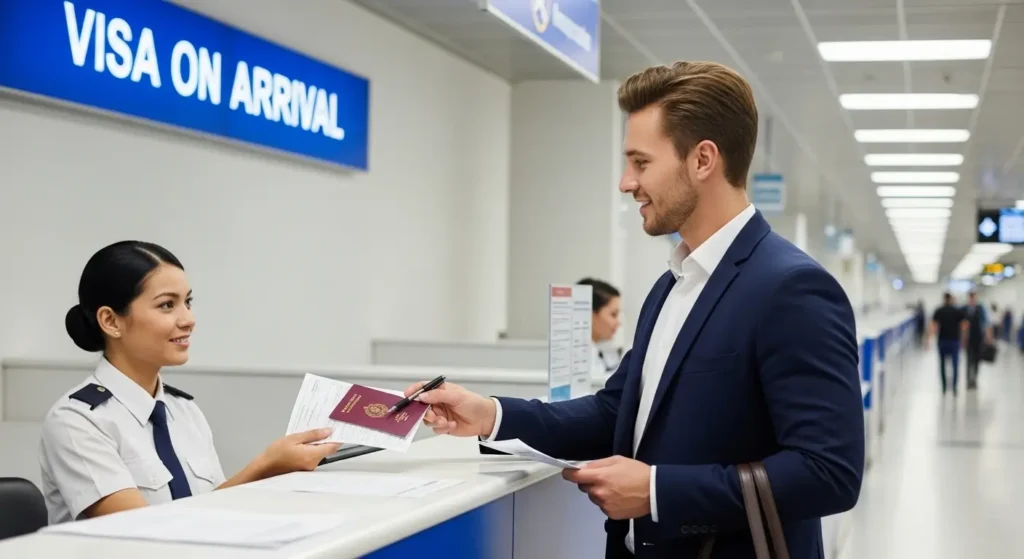
Always carry more cash than the visa fee, a few extra passport photos, and printed copies of your return ticket and hotel booking.
- Research VOA eligibility at least 2 to 3 weeks before travel from the official government immigration website of the destination country
- Prepare all documents in a folder so you can present them quickly at the counter
- Arrive at the airport with enough time to account for VOA queues, especially at peak travel periods
- If a country offers an eVisa option alongside VOA, consider applying online to save time at the border
- Keep a photocopy of your visa stamp and entry documents during your stay
- Know your exit deadline and set a reminder to leave or extend before it passes
Eligibility Factors
| Factor | Why It Matters |
|---|---|
| Passport country (nationality) | The most important factor. VOA lists differ by passport strength and bilateral agreements |
| Travel history | Prior visits to certain countries (e.g. Israel) can affect eligibility in some destinations |
| Purpose of visit | VOA is only for tourism or short business trips in most countries |
| Valid documents | Passport validity, blank pages, and a return ticket are standard requirements |
| Criminal record | Some countries deny entry to travelers with certain criminal backgrounds |
| Financial sufficiency | Officers may ask for proof that you can support yourself during the stay |
Conclusion
Visa on arrival is a convenient entry system that allows eligible travellers to obtain a short stay visa directly at their destination instead of applying at an embassy beforehand. It is designed to support tourism and short business travel, and it is available in dozens of countries worldwide.
That said, it is not a guaranteed right. Eligibility depends on your nationality, the destination country, and whether you meet the basic travel requirements. Going in unprepared can mean denial at the border.
Key Takeaways:
- Visa on arrival meaning: a visa issued at the destination port of entry, not before departure
- Always verify your nationality is eligible before booking flights
- Carry exact visa fees in cash, plus passport photos and required documents
- VOA is for tourism and short visits only, never for work or long term stays
- Do not overstay your permitted duration, as consequences can be severe
- Consider e Visa where available for a smoother and more predictable process
- Always check the official government immigration website of your destination country for the latest rules
FAQs
1. What is Visa on Arrival?
Visa on Arrival is a visa you receive when you arrive in a foreign country. Instead of applying in advance, you complete the visa process at the airport or border entry point.
2. How does Visa on Arrival work?
When you arrive at your destination, you go to the visa counter, fill out the required form, submit your documents, and pay the visa fee. After approval, the visa is stamped into your passport so you can enter the country.
3. Which countries offer Visa on Arrival?
Several countries offer Visa on Arrival, including Thailand, Maldives, Indonesia, Nepal, and in some cases the UAE depending on your nationality. The availability depends on your passport.
4. What documents are required for Visa on Arrival?
You usually need a valid passport with at least six months validity, a return or onward ticket, proof of accommodation, and sometimes passport sized photos. You will also need to pay the visa fee at the airport.
5. Is Visa on Arrival guaranteed?
No, Visa on Arrival is not guaranteed. Immigration officers have the authority to refuse entry if you do not meet the requirements or if there are any concerns.
6. How much does Visa on Arrival cost?
The cost varies depending on the country, but it typically ranges from around $20 to $150. Some countries only accept cash, so it is best to check before travelling.