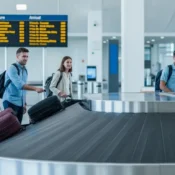
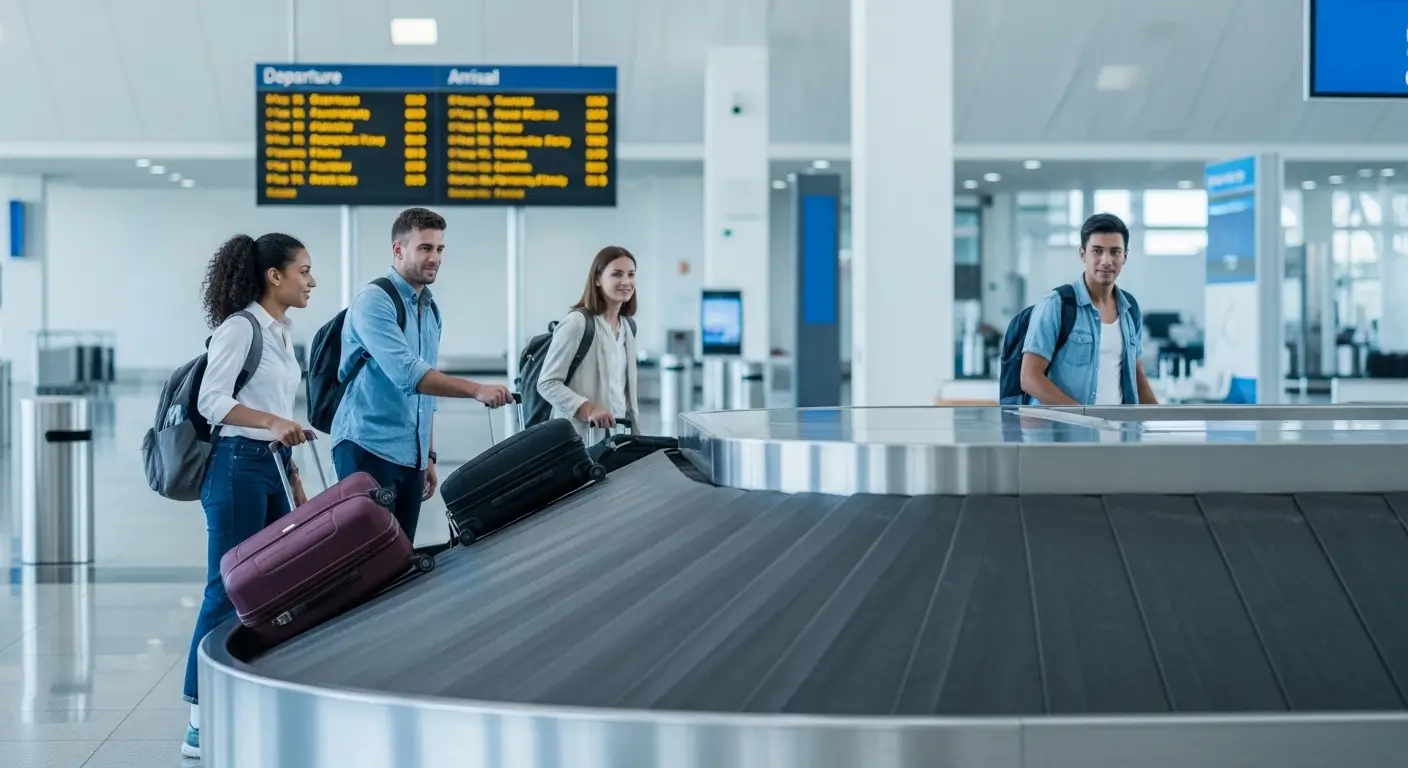
When you travel on connecting flights, rechecking baggage means collecting your luggage at the connecting airport and submitting it again for your next flight. Whether you need to recheck baggage on a connecting flight depends on several factors: the airlines you are flying with, the countries involved, and whether your bags were checked through to your final destination. Most travelers on connecting flights with the same airline or airline alliance partners do not need to recheck their bags at all, because the luggage is automatically transferred. However, international travelers arriving in countries like the United States, Canada, or Australia are almost always required to collect and recheck their baggage regardless of the airline.
Knowing in advance whether you need to recheck baggage connecting flight can save you from missing a connecting flight, paying unexpected fees, or losing your luggage in transit. This complete guide covers every situation you might face, including interline agreements, customs procedures, layover time requirements, and step by step instructions so your bags reach your final destination safely and on time.
What Does Rechecking Baggage Mean
Rechecking baggage simply means that during a layover, you go to the baggage claim area, pick up your checked luggage, and then drop it off again at the check in counter or baggage drop for your next flight. Your bags do not travel on their own to the next aircraft. You physically handle them between flights.
This process is different from a straight connection where your baggage is tagged all the way through to your final destination and airline staff transfer it automatically between planes without you touching it.
Understanding the difference is critical before you book any trip with a layover.
Recheck Baggage Requirements by Situation
| Situation | Recheck Required | Reason |
|---|---|---|
| Same airline, domestic connection | No | Bags are checked through automatically |
| Same airline alliance (e.g., Star Alliance) | Usually No | Interline baggage agreement in place |
| Two different airlines, no interline agreement | Yes | Each airline handles bags separately |
| International flight arriving in the USA | Yes | US Customs requires all passengers to collect bags |
| International flight arriving in Canada | Yes | Canada Border Services requires bag collection |
| International flight arriving in Australia | Yes | Australian Border Force requires customs screening |
| Domestic to domestic within same country | Usually No | Single check in covers full journey |
| Budget airline to budget airline | Yes | Most low-cost carriers do not share baggage systems |
Countries Where You Always Have to Recheck Baggage
Some countries have strict customs and immigration rules that require every arriving international passenger to collect their bags, clear customs, and then recheck them for the onward flight. This applies even if you are flying on the same airline for both legs.
The United States
The United States has one of the strictest baggage reclaim policies in the world. Every traveler entering the US on an international flight must:
- Collect all checked baggage at the first US airport of entry
- Pass through US Customs and Border Protection with the bags
- Recheck the baggage at the airline counter or baggage re drop
- Go through TSA security screening again before the connecting gate
This rule applies at airports like New York JFK, Los Angeles LAX, Chicago O Hare, Miami International, and every other US entry point. Even if your layover is only 90 minutes, you must complete this full process. Many travellers are surprised by how much time customs and immigration actually takes, so it helps to read up on exactly where you go through customs when you have a connecting flight before your departure day.
Canada
Canada follows a similar policy. International passengers must collect bags at the first Canadian airport, clear CBSA customs, and recheck for domestic or onward international flights. Toronto Pearson, Vancouver International, and Montreal Trudeau are the most common transit points.
Australia
Australia requires all incoming international passengers to collect bags, pass through Australian Border Force, and recheck for domestic connections. Sydney, Melbourne, and Brisbane are the main entry points.
United Kingdom
The UK generally does not require baggage reclaim for airside connections, meaning if you remain in the secure area and your bags are tagged through, you do not need to recheck. However, if you need to pass through UK Border Control, rechecking may be required.
When You Do NOT Need to Recheck Baggage
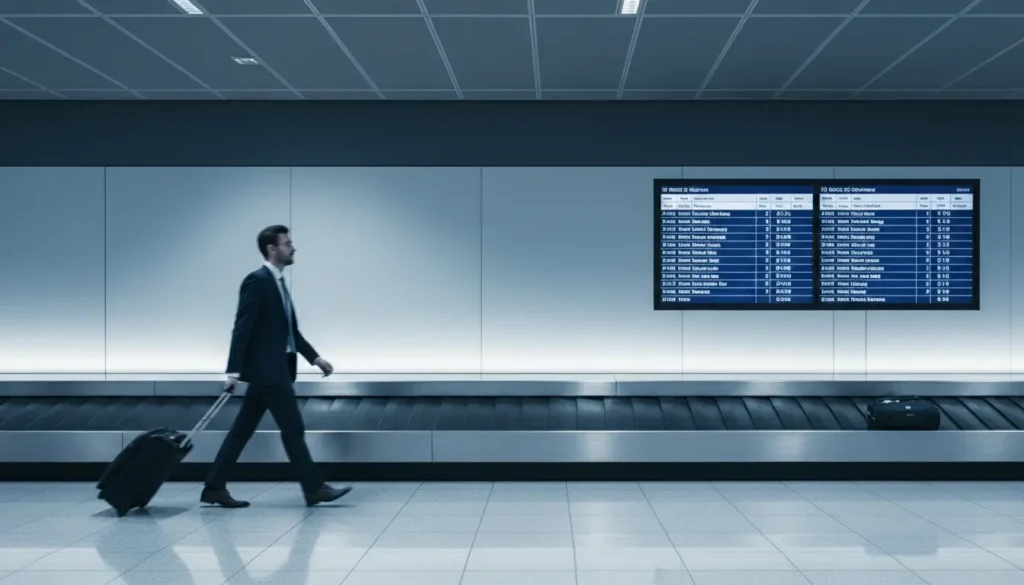
There are many situations where your bags travel automatically and you do not need to lift a finger.
Key conditions where rechecking is not required:
- You are flying entirely on one airline for both legs of your journey
- You are flying on partner airlines within the same airline alliance (Star Alliance, SkyTeam, Oneworld)
- Your ticket was booked as a single itinerary and the airlines have an interline baggage agreement
- You are making a domestic to domestic connection within the same country on the same booking
- Your layover is at an airport that handles airside connections without customs (common in Europe and the Middle East)
The golden rule is to check your baggage tag at the check in counter. If your bag tag shows your final destination airport code, your bags are checked through and you do not need to collect them at the connection point.
Step by Step Guide: How to Recheck Baggage on a Connecting Flight
If you have confirmed that you need to recheck your bags, follow these steps carefully to avoid delays and missing your connection.
Step 1: Know Before You Fly
Before your travel date, check with your airline whether your bags will be checked through or if you need to recheck. You can do this by calling the airline, checking your booking confirmation, or asking at the check-in counter on departure day. If you are on two separate bookings, always assume you need to recheck.
Step 2: Allow Enough Layover Time
Rechecking baggage takes time. You need to factor in:
- Time to deplane and walk to baggage claim
- Wait time for bags to arrive on the carousel
- Customs and immigration processing time
- Bag drop and check-in queue at the connecting airline
- Security screening again
- Walking to the departure gate
For international connections requiring customs, a minimum of 2.5 to 3 hours layover is strongly recommended. For domestic connections with mandatory recheck, 90 minutes to 2 hours is a safe buffer.
Step 3: Follow Arrival Signs to Baggage Claim
After landing at your connecting airport, follow signs to the baggage claim or arrivals hall. Do not exit the airport entirely unless directed. In countries like the US, you will be guided through immigration and customs before reaching baggage claim.
Step 4: Collect Your Bags
Wait at the correct carousel for your incoming flight number. Most airports display carousel assignments on overhead screens near baggage claim. Collect all your checked bags.
Step 5: Clear Customs if Required
In countries requiring customs clearance, you will hand your customs declaration form to an officer and they will direct you forward. Occasionally bags are scanned or inspected. Keep all your documents ready.
Step 6: Find the Baggage Re Drop or Check In Counter
After exiting customs, look for signs to departures or bag re drop. Many airports have dedicated re check counters near the arrivals exit. At US airports, these are often called Transfer Baggage Drop or Connecting Baggage Drop counters.
Step 7: Check In Your Bags for the Next Flight
Hand your bags over at the counter. Your boarding pass from the original check-in may still be valid, or you may need to reprint at the counter. Confirm that your bags are tagged to your final destination.
Step 8: Go Through Security and Proceed to Gate
With your bags rechecked, proceed to the security checkpoint. Remember you are now in the departures area again and must go through full screening with your carry on items.
Minimum Recommended Layover Time for Rechecking Baggage
| Connection Type | Minimum Layover Recommended |
|---|---|
| Domestic to domestic, no recheck needed | 45 to 60 minutes |
| Domestic to domestic, recheck required | 90 minutes |
| International arriving in USA | 2.5 to 3 hours |
| International arriving in Canada | 2 to 2.5 hours |
| International arriving in Australia | 2 to 2.5 hours |
| Two separate bookings, same terminal | 2 hours |
| Two separate bookings, different terminals | 3 hours or more |
| Budget airline to full-service airline | 2.5 hours minimum |
What Happens If Your Bag Misses the Connection
If you recheck your bag but your connecting flight departs before the bag can be loaded, the airline will send the bag on the next available flight to your destination. Here is what you should do:
- Report the missing bag immediately at the baggage service desk at your final destination airport
- Fill out a Property Irregularity Report (PIR) with your contact details and delivery address
- Keep your baggage claim tickets and boarding passes as proof
- Ask the airline for a baggage reference number and use it to track your bag online
Most airlines deliver delayed bags within 24 to 48 hours. You may be entitled to compensation for essential items purchased during the delay. It is worth knowing your rights when a flight is delayed because the same passenger protection rules often apply to delayed or mishandled baggage during disrupted connections, and many travellers leave money on the table simply because they do not know what to claim.
Separate Bookings vs Single Itinerary
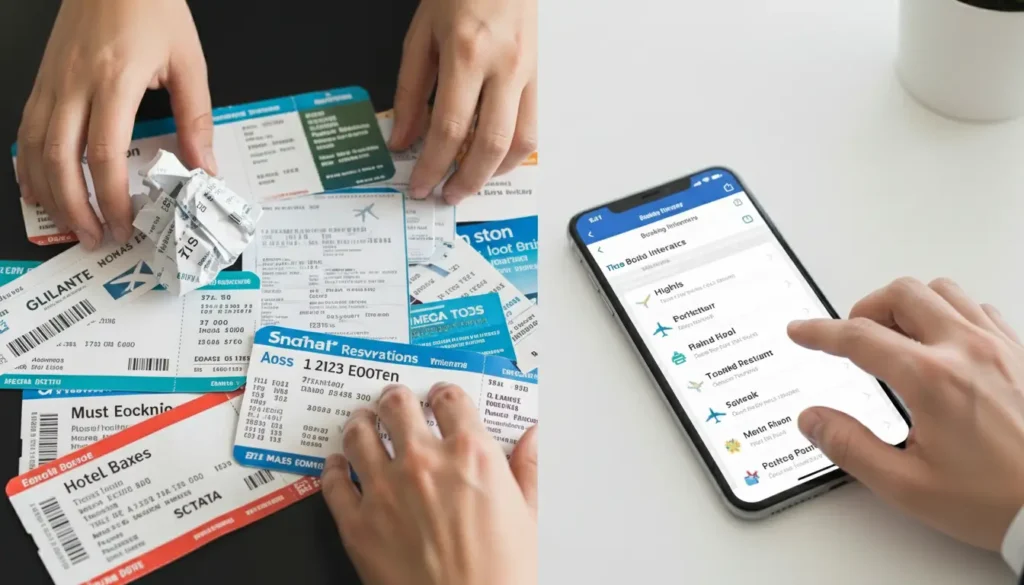
One of the most important factors in baggage rechecking is whether you booked your flights on a single itinerary or as separate bookings.
Single Itinerary Booking
When you book all flights together through one airline or travel agent on a single ticket, the airline is responsible for transferring your bags between flights. If a connection is missed due to a delay on the first flight, the airline must rebook you and your bags at no extra cost.
Separate Bookings
When you book flights separately, for example booking one flight on one airline website and another flight on a different website, you are responsible for your own connection. This means:
- You must recheck your own bags at the connection point
- If the first flight is delayed and you miss the second, the second airline has no obligation to help
- You may need to pay additional baggage fees at the connection airport
- You need a longer layover to safely complete the transfer
Every airline has its own rules on how much luggage you can carry, what the weight limits are, and what fees apply for excess bags. Before booking separate flights, it pays to review current airline baggage policies and packing tips so you are not caught off guard at the bag drop counter with a bag that exceeds the second carrier’s allowance.
Always prefer a single itinerary booking when possible to reduce stress and risk.
Single Itinerary vs Separate Bookings Comparison
| Factor | Single Itinerary | Separate Bookings |
|---|---|---|
| Baggage through-check | Usually yes | No, must recheck yourself |
| Airline responsibility for missed connection | Yes | No |
| Additional baggage fees at connection | No | Possible |
| Recommended layover time needed | Standard (60 to 90 min) | Extended (2 to 3 hours) |
| Cost | Often higher | Often cheaper |
| Risk level | Low | High |
| Best for short layovers | Yes | No |
Tips for a Smooth Baggage Recheck Experience
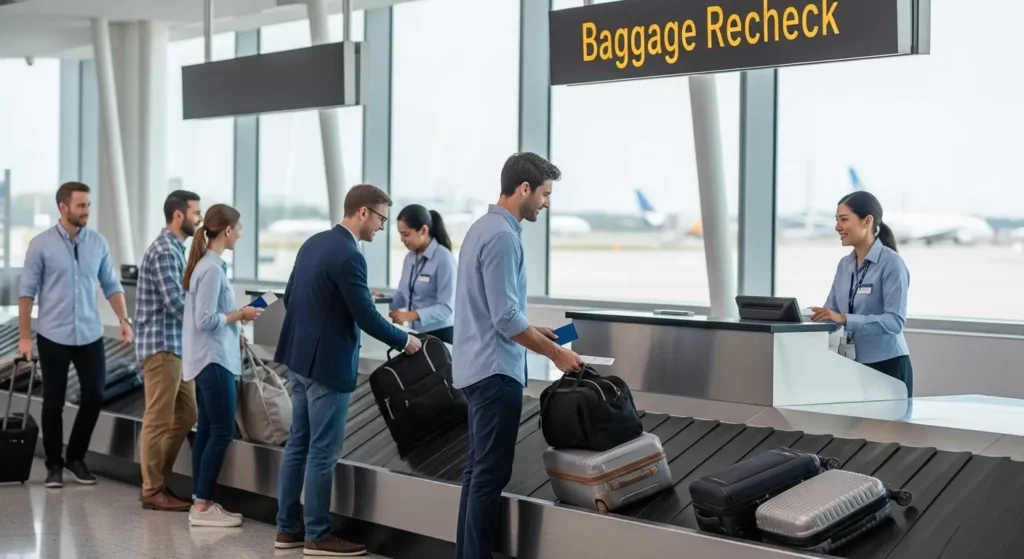
Making your connecting flight with rechecked bags is absolutely manageable if you plan properly. Keep these tips in mind:
- Always tag your bag with your name, phone number, and final destination address in case it gets separated
- Use a bright luggage tag or ribbon so your bag is easy to spot on the carousel
- Arrive at your departure airport early so check-in staff can flag any potential recheck issues before you fly
- If traveling to the US, complete your ESTA or visa documents before departure so immigration goes faster
- Keep your baggage claim stubs in your wallet or travel pouch, not inside your checked bag
- Carry essential medications, one change of clothes, and important documents in your carry-on in case your checked bag is delayed
- Download your airline app before travel so you can track bag status in real time
- Inform the airline check in agent at departure if you have a tight connection, so they can prioritize loading your bag on the first aircraft
Final Thoughts
Rechecking baggage on connecting flights is a straightforward process once you understand the rules. The most important things to remember are that certain countries always require you to collect and recheck regardless of airline, separate bookings almost always require rechecking, and sufficient layover time is the single biggest factor in avoiding missed connections and lost luggage.
Plan your layovers wisely, check your baggage tags before leaving the check in desk, and carry essentials in your hand luggage. With the right preparation, your bags will reach your destination just as smoothly as you do.
Frequently Asked Questions
1.Do I need to recheck baggage on a layover in Dubai?
Dubai International Airport (DXB) is a major transit hub for Emirates. If you are flying on Emirates for both legs, your bags are generally checked through and you do not need to recheck. However, if you are connecting to another airline without an interline agreement, you may need to collect and recheck.
2.Can I recheck baggage if I have a layover of only 1 hour in the USA?
A one-hour layover in the US is extremely risky when rechecking is required. You must collect bags, clear customs, recheck, and go through security all within that time. Most travel experts recommend a minimum of 2.5 to 3 hours for US connections involving international arrivals. If your itinerary shows a short US connection, contact the airline to confirm whether it is legally protected and whether there is a later flight you can be moved to if needed.
3.What if my airline does not allow baggage through-check to a partner airline?
Ask the check-in agent explicitly whether they can tag your bags to the final destination. Some airlines offer this service only on request. If they cannot, build in extra time at your connection point for rechecking and confirm the second airline allows the same baggage allowance as your first ticket.
4.Is baggage rechecking free?
In most cases, if you are rechecking on the same booking or with partner airlines, there is no additional fee. If you are on separate bookings and checking in fresh with a second airline, their standard baggage fees apply. Always check the second airline baggage policy before booking.