

Flight price prediction is the process of using artificial intelligence, machine learning algorithms, and big data analytics to forecast whether airline ticket prices will rise or fall in the coming days or weeks. Tools like Google Flights, Hopper, and Kayak use historical pricing data, seasonal trends, demand patterns, and route specific behaviour to generate predictions that help travellers decide the best time to book. These systems analyze millions of data points in real time to give users a competitive advantage when searching for cheap flights.
Understanding how flight price prediction works can save travellers hundreds of dollars per trip. Airlines use dynamic pricing models that change fares dozens of times a day based on seat availability, competition, time to departure, and booking demand. By leveraging AI powered prediction tools, smart travelers can track fare trends, set price alerts, and book at the optimal moment turning data into real savings on every journey.
What Is Flight Price Prediction
Flight price prediction is the use of advanced algorithms, historical data, and artificial intelligence to estimate the future cost of airline tickets. Rather than guessing when to book, travelers can now rely on data-backed recommendations.
Airlines are masters of dynamic pricing. A seat from Lahore to Dubai might cost PKR 45,000 on Monday and PKR 72,000 by Thursday with no obvious reason why. Flight price prediction tools reverse-engineer this behaviour to find patterns and help you buy at the right time.
Why Flight Prices Change So Often
Before diving into the 7 methods, it’s important to understand why flight prices fluctuate so dramatically:
- Seat availability: As seats fill up, prices rise automatically
- Time to departure: Last-minute flights can be either very cheap or extremely expensive
- Day of the week: Tuesdays and Wednesdays often have lower fares
- Seasonal demand: School holidays, Eid, and summer push prices up
- Competitor pricing: Airlines monitor each other and adjust instantly
- Route popularity: High-demand routes like Karachi–Dubai stay expensive
Airlines constantly adjust fares using dynamic pricing systems. If you want to understand the best booking window in more detail, read our guide on best time to book international flights which explains how airfare trends behave across different seasons.
7 Ways Flight Price Prediction Works
1. Historical Price Data Analysis

The foundation of every flight price prediction system is historical pricing data. AI tools collect and store fare data across thousands of routes over months and years. By analyzing this data, the algorithm identifies recurring patterns:
- When do prices typically drop for a specific route.
- How far in advance should you book for maximum savings.
- Which months are historically the cheapest.
For example, if data shows that Lahore London flights drop in price 6–8 weeks before departure every January, the algorithm will flag this as a buying opportunity every year.
How this helps you: Tools like Hopper and Google Flights use historical data to show you whether a current price is “low,” “typical,” or “high” compared to past trends.
These historical patterns are also useful when searching for deals like cheap last minute flights where prices sometimes drop unexpectedly close to departure.
2. Machine Learning Algorithms
Modern flight price prediction platforms don’t just look at history they learn from it. Machine learning (ML) models are trained on billions of fare data points and continuously improve their accuracy over time.
These ML models consider dozens of variables simultaneously:
- Time until departure
- Day of booking
- Current demand
- Competing airline prices
- Weather patterns (affecting travel demand)
- Major events or holidays
The more data the model processes, the sharper its predictions become. Hopper, for instance, claims its ML model can predict flight prices with 95% accuracy up to 1 year in advance.
3. Real Time Demand Monitoring
Supply and demand is at the heart of airline pricing. Flight price prediction tools monitor seat availability in real time across all fare classes to detect when demand is rising or falling.
Here’s how demand monitoring works in prediction:
- High search volume + low bookings = prices likely to stay flat or drop
- High search volume + high bookings = prices likely to rise soon
- Low search volume = potential for discounted fares ahead
| Demand Level | Booking Behavior | Price Trend |
|---|---|---|
| Very High | Seats filling fast | Prices rising sharply |
| Moderate | Steady bookings | Prices stable |
| Low | Few bookings | Price drop likely |
| Near Departure | Unsold seats | Flash sales possible |
This table illustrates why monitoring demand not just price is critical for finding cheap flights. Travellers looking for hidden deals can also benefit from learning how error fares work because sudden pricing mistakes often appear when demand signals confuse airline pricing systems.
4. Price Alert Systems and Trigger Based Notifications

One of the most practical applications of flight price prediction is automated price alerts. Rather than checking fares daily, travelers set a target price and the system notifies them the moment that price is hit.
How price alerts work:
- You enter your route, travel dates, and target price
- The algorithm monitors fares 24/7
- When the price drops to your threshold or shows signs of dropping you get an instant notification via email, SMS, or app push
Best tools for price alerts:
- Google Flights Free, reliable, and easy to set up
- Kayak Sends predictions on whether to “Buy Now” or “Wait”
- Hopper Colour coded calendar showing cheapest travel days
- Skyscanner “Watch this trip” feature with email alerts
- Air fare watch dog Specializes in finding error fares and flash deals
Setting price alerts is one of the simplest yet most powerful strategies for budget travellers. If you frequently track airfare trends, you should also understand why Tuesday flights are cheaper since mid-week pricing patterns often influence how prediction algorithms estimate fare drops.
5. Fare Calendar and Flexible Date Tools
Flight price prediction isn’t just about one date it’s about showing you the cheapest possible window to fly. Fare calendar tools display price predictions across a full month so you can visually identify the lowest-cost travel days.
Benefits of flexible date search:
- Spot the cheapest day in a 30-day window instantly
- Compare weekend vs. weekday fares at a glance
- Identify “shoulder dates” around holidays that are much cheaper
- Plan trips around price not just convenience
| Travel Period | Typical Price Behavior | Best Strategy |
|---|---|---|
| Eid / Major Holidays | Prices peak 3–4 weeks before | Book 6–8 weeks in advance |
| Off-Peak Weekdays (Tue/Wed) | Consistently lowest fares | Always check mid-week departures |
| Last 72 Hours | Unpredictable high or very low | Only book if fare is historically low |
| 3–6 Weeks Before Departure | Sweet spot for most routes | Ideal booking window |
| More Than 3 Months Out | Moderate pricing | Good for peak season routes |
Using a fare calendar combined with price prediction dramatically increases your chances of booking at the right time.
6. Route and Airline Behaviour Profiling
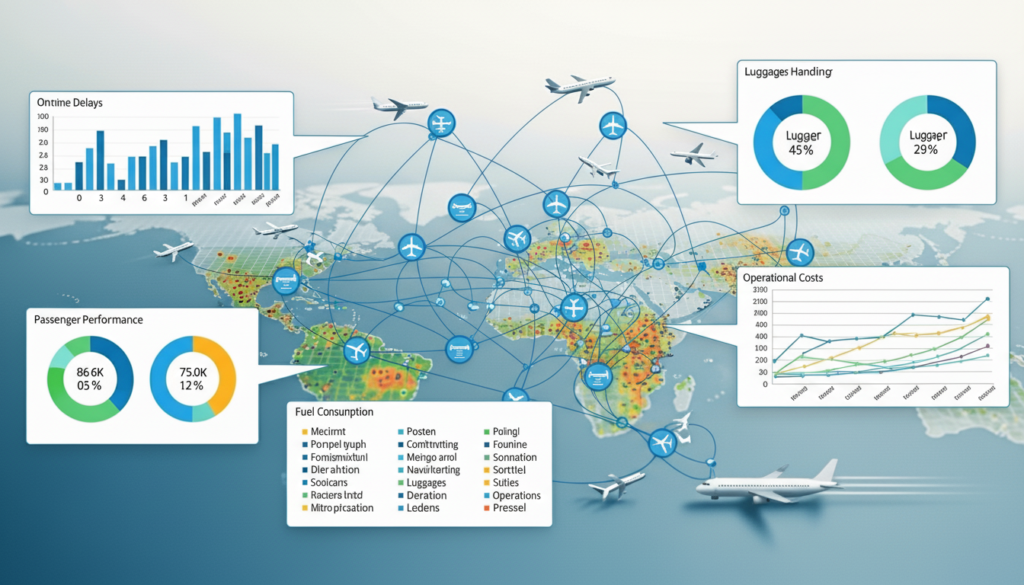
Not all airlines and routes behave the same way. Advanced flight price prediction systems build unique profiles for every airline-route combination. This means the algorithm knows:
- Which airlines tend to run flash sales on specific routes
- Which routes rarely drop in price and should be booked early
- Whether budget carriers or full-service airlines offer better value on a given route
- How connecting flight prices compare to direct routes over time
Key insights from route profiling:
- Budget carriers like Air Arabia and FlyDubai often release cheap seats 8–10 weeks out
- Full-service carriers like Emirates sometimes offer last-minute upgrades at discounted rates
- Connecting routes through hub cities (Dubai, Istanbul, Doha) often undercut direct flights significantly
- Routes with multiple competing airlines show more price volatility and more savings opportunities
By understanding airline behaviour on your specific route, prediction tools can tell you which airline to watch not just when to book.
7. AI Powered Buy Now vs. Wait Recommendations
The most direct application of flight price prediction is the simple Buy Now or Wait recommendation. This is the holy grail of flight booking assistance one clear, data-backed answer when you’re staring at a price and can’t decide.
Tools like Hopper, Kayak, and Google Flights have developed AI engines that analyze all available signals and deliver a single recommendation:
- Buy Now Price is at or near its lowest; likely to rise
- Wait Price is expected to drop further in the coming days
- Watch Price is neutral; set an alert and monitor
Factors the AI weighs in this decision:
- Current price vs. historical average for this route
- Days remaining until departure
- Current booking demand trend
- Seasonal context (is a holiday approaching.)
- Seat availability across all fare classes
- Competitor pricing movements
This recommendation feature has been a game-changer for travelers who don’t have time to obsessively track fares.
Best Flight Price Prediction Tools Compared
| Tool | Free to Use | Price Alerts | Buy or Wait Feature | Best For |
|---|---|---|---|---|
| Google Flights | Yes | Yes | Yes | General use, flexibility |
| Hopper | Yes | Yes | Yes | Mobile users, predictions |
| Kayak | Yes | Yes | Yes | Comparison shopping |
| Skyscanner | Yes | Yes | No | International routes |
| Airfarewatchdog | Yes | Yes | No | Error fares, deals |
Pro Tips to Maximize Flight Price Prediction Tools
Here are actionable tips to get the most out of any flight price prediction platform:
- Use incognito mode when searching some airlines track your searches and raise prices
- Search flexible dates whenever possible even shifting by 1–2 days can save 20–40%
- Set multiple price alerts on different tools for the same route
- Book mid week Tuesday and Wednesday bookings often yield lower fares
- Check nearby airports flying from a secondary airport can cut costs significantly
- Monitor prices 4–8 weeks before departure this is the sweet spot for most international routes
- Don’t ignore connecting flights a layover in Dubai or Istanbul can save hundreds
- Act fast on flash sales AI alerts notify you, but deals disappear within hours
Common Myths About Flight Price Prediction
Many travelers hold misconceptions that cost them money:
- Booking months in advance is always cheapest Not true for every route; some fares drop closer to departure
- Clearing cookies lowers prices Partially true; use incognito to be safe, but it’s not a guaranteed fix
- Tuesday is always the cheapest day to fly Tuesday is often cheapest to book, not always to fly
- AI tools guarantee the lowest price They predict probabilities, not certainties; always verify manually
- Last minute flights are always a bargain Airlines often raise prices in the final days to maximize revenue on remaining seats
Final Thoughts
Flight price prediction has transformed from a travellers fantasy into a practical, AI-powered reality. By understanding how these 7 methods work from historical data analysis and machine learning to real-time demand monitoring and Buy Now vs Wait recommendations you gain a massive advantage over the average traveller who books on impulse.
The key takeaway is simple: don’t guess. Use the tools, set your alerts, stay flexible with dates, and let data guide your booking decisions. Whether you’re flying from Lahore to London or Karachi to New York, the right prediction strategy can save you thousands of rupees on every trip.
Start using flight price prediction tools today and never overpay for a flight again.
FAQ
1. What is flight price prediction?
Flight price prediction is a technology that uses historical airfare data, travel demand trends, and algorithms to estimate whether flight prices will increase or decrease. It helps travellers decide the best time to book cheap flights.
2. How does flight price prediction work?
Flight price prediction works by analysing large datasets such as previous ticket prices, airline demand patterns, seasonal travel trends, and route popularity. Machine learning models then forecast future price changes and suggest whether to book now or wait.
3. Are flight price prediction tools accurate?
Flight price prediction tools are generally reliable but not 100% guaranteed. They provide data-driven estimates based on past trends, airline pricing behaviour, and demand fluctuations to help travellers make smarter booking decisions.
4. Which websites use flight price prediction technology?
Many travel platforms use flight price prediction, including tools like Google Flights, Skyscanner, Hopper, and Kayak. These platforms analyse airfare data and provide insights on when prices are expected to rise or drop.
5. When is the best time to book cheap flights?
The best time to book cheap flights is usually 4 to 8 weeks before domestic travel and 2 to 4 months before international trips. Flight prediction tools help identify the most affordable booking window based on route demand and historical pricing data.
6. Can flight price prediction help save money?
Yes, flight price prediction can help travellers save money by identifying the optimal booking time. By analysing trends and price patterns, these tools alert users when fares are likely to increase or when a deal is available.
7. Do airlines change ticket prices frequently?
Yes, airlines adjust ticket prices frequently based on demand, seat availability, seasonality, competition, and booking trends. Flight price prediction systems track these patterns to forecast possible price changes.
8. Is it better to book flights early or wait?
It depends on the route and travel season. Flight prediction tools analyse historical airfare trends and suggest whether you should book now or wait for a potential price drop.