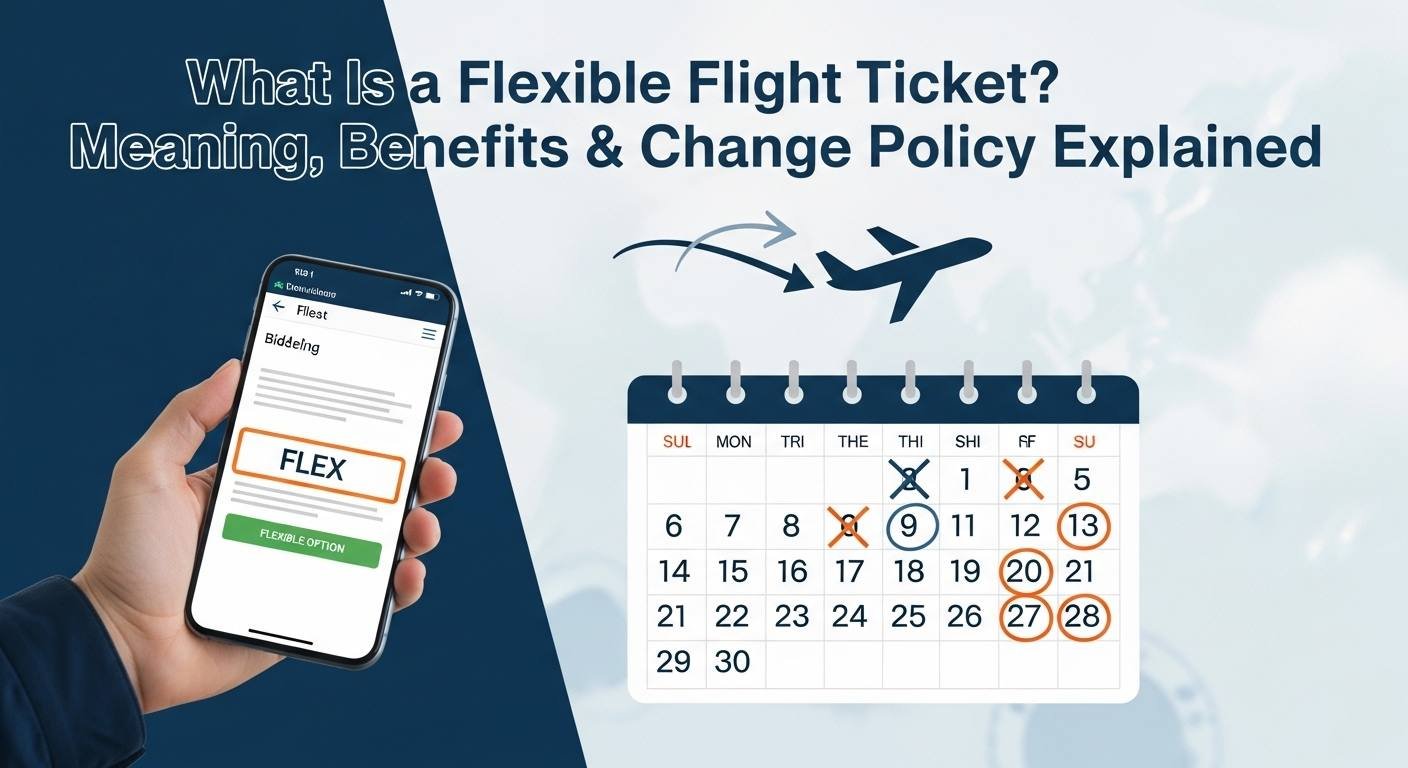
A flexible flight ticket is a type of airline fare that allows passengers to change, reschedule, or cancel their flight with little to no penalty fee. Unlike standard non-refundable tickets, a flexible flight ticket gives travellers the freedom to modify their travel dates, times, or even destinations without losing their money. These tickets are ideal for business travellers, frequent flyers, and anyone with an unpredictable schedule who needs the security of knowing their plans can change without financial consequences.
When you purchase a flexible flight ticket, you typically get benefits such as free date changes, full or partial refunds on cancellations, priority rebooking, and sometimes complimentary seat selection. While flexible flight tickets cost more than basic economy fares sometimes 20% to 200% higher the investment is worth it when your travel plans are uncertain. Most major airlines including British Airways, Emirates, Delta, and Lufthansa offer flexible flight ticket options under different fare family names, making it easy to find one that suits your budget and travel needs.
What Is a Flexible Flight Ticket
A flexible flight ticket, also known as a refundable or changeable fare, is a type of airline ticket that allows passengers to modify, reschedule, or cancel their flight with little to no financial penalty. Unlike budget or economy fares that lock you into a fixed schedule the moment you hit “confirm,” flexible tickets give you the freedom to adapt your travel plans without losing your money.
Airlines typically offer flexible tickets under various brand names British Airways calls them “Flex” fares, Emirates offers “Flex” and “Flex Plus” options, and American Airlines uses “Fully Refundable” fare categories. Despite the different branding, the core principle remains the same: you pay a premium upfront in exchange for travel freedom and financial protection.
Flexible tickets are especially popular among business travellers, frequent flyers, and anyone whose schedule is genuinely unpredictable. They sit at the opposite end of the spectrum from non-refundable budget fares, which are cheaper but carry heavy penalties or outright refusal if you need to make changes.
Flexible vs. Non Flexible Tickets: Key Differences
To truly understand what a flexible ticket offers, it helps to compare it directly with a standard non-flexible fare. The table below outlines the most important distinctions.
| Feature | Flexible Ticket | Non-Flexible (Standard) Ticket |
|---|---|---|
| Date/Time Change | Free or low fee | Penalty fee (often $75–$400+) |
| Cancellation Refund | Full or partial refund | No refund or credit only |
| Name Change | Often permitted | Rarely allowed |
| Upgrade Eligibility | Usually prioritized | Limited or not eligible |
| Same-Day Flight Change | Frequently available | Usually not available |
| Price | 20%–200% higher than base fare | Lowest available price |
| Seat Selection | Often included | Often charged separately |
| Lounge Access | Sometimes included | Not included |
As you can see, the gap between flexible and non-flexible fares goes beyond just cancellation. Flexible tickets often bundle in extra perks that can add meaningful value, especially on long haul or international routes. If your concern is airline delays instead of cancellations, you should also check your rights in our flight delay rights guide especially useful for EU and US travellers.
Types of Flexible Tickets
Not all flexible tickets are created equal. Airlines typically structure their fare families across several tiers, and the degree of flexibility varies between them. Here’s a breakdown of the most common types:
Fully Refundable Fares These are the gold standard of flexible tickets. If you cancel for any reason, you receive 100% of your ticket price back to your original payment method no vouchers, no credits, no strings attached.
Partially Refundable Fares These allow cancellation, but the airline retains a service or cancellation fee. You may receive 60–80% of your fare back, depending on the airline and how far in advance you cancel.
Open-Jaw or Open-Date Tickets These tickets let you fly into one city and out of another, or leave the return date open entirely. They’re popular among travelers who want maximum geographic or scheduling freedom.
Semi-Flex Fares A middle ground between rigid budget tickets and fully flexible ones. These allow one or two free changes but charge for cancellations. Many airlines now offer these as their “standard” or “value” fare classes.
Business and First Class Fares Premium cabin tickets are almost universally flexible by default. Airlines know their business-class clientele needs schedule agility, so refundability and free changes are baked into the pricing.
Benefits of Buying a Flexible Flight Ticket

Purchasing a flexible ticket isn’t just about covering worst-case scenarios. There are real, tangible advantages that can improve your entire travel experience from booking to landing.
- Full peace of mind — You’re not mentally committed to a rigid schedule. If something changes, you have an option without financial catastrophe.
- Protection against airline-initiated changes — If the airline changes your flight, flexible ticket holders are usually first in line for rebooking on preferred alternatives.
- No last-minute panic — Standard fares can become astronomically expensive if you need to rebook at short notice. With a flexible ticket, same-day changes are often free.
- Better seat selection — Many flex fares include complimentary advance seat selection, meaning you can choose your preferred window or aisle without paying extra.
- Potential for upgrades — Frequent flyer programs often prioritize flexible fare holders for complimentary or discounted upgrades to business or first class.
- Tax and fee recovery — Even on non-refundable tickets, only the base fare is typically non-refundable. With a flexible ticket, you recover the full amount including taxes.
- Corporate travel compliance — Many companies require employees to book refundable fares for exactly this reason: last-minute meeting changes shouldn’t mean wasted travel budgets.
- Travel insurance synergy — Flexible tickets pair excellently with travel insurance, giving you double protection against unexpected disruptions.
Travel insurance synergy Flexible tickets pair well with travel insurance. However, if you’re unsure whether insurance alone is enough, review our complete guide on how to hold a flight ticket without paying to explore other flexibility strategies.
How the Change and Cancellation Policy Works
Understanding the mechanics of a flexible ticket’s change policy is essential before you buy. While policies vary by airline, the general framework looks like this:
Making a Change
When you want to change your flexible ticket, you typically have three options: call the airline directly, make changes through the airline’s website or app, or contact a travel agent if you booked through one. Most airlines now allow self-service changes online, which is far quicker.
When you change a date or time, you may need to pay any fare difference if the new flight is priced higher than your original booking. However, the change fee itself is waived on flexible tickets. If the new flight is cheaper, some airlines will issue the difference as a travel credit, while others simply absorb the difference so it’s worth checking the specific policy before assuming you’ll get money back.
Cancellations and Refunds
For fully refundable tickets, the refund process typically works as follows:
- You cancel the ticket online or via the airline’s customer service.
- The airline confirms cancellation and initiates a refund.
- Refunds are processed back to the original payment method within 7 to 20 business days, depending on the airline and your bank.
- Some airlines may deduct a small administrative fee (usually under $50) even on “fully refundable” fares — always read the fine print.
For partially refundable fares, the amount returned depends on how early you cancel. Cancelling weeks ahead typically results in a higher refund than cancelling within 24–48 hours of departure.
Flexible Ticket Pricing: Is It Worth the Extra Cost
The big question most travelers face is whether the premium price of a flexible ticket is justified. The answer depends entirely on your circumstances.
The table below helps you evaluate when a flexible ticket is worth the investment versus when a standard fare makes more financial sense.
| Traveler Type | Trip Purpose | Flexible Ticket Worth It? | Reason |
|---|---|---|---|
| Business traveler | Client meetings / conferences | Yes | Schedules change frequently |
| Solo leisure traveler | Beach holiday, fixed dates | Probably not | Low risk of changes needed |
| Family traveler | School holiday trip | Consider it | Multiple people = more variables |
| Frequent flyer | Monthly work trips | Yes | Changes are almost inevitable |
| Budget backpacker | Open-ended trip | Yes | Open-date tickets add flexibility |
| Honeymoon couple | Once-in-a-lifetime trip | Consider it | Emotional and financial stakes are high |
| Medical traveler | Treatment-related travel | Yes | Appointments can shift unexpectedly |
The golden rule is simple: if the cost difference between a flexible and non-flexible fare is less than what you’d lose if you had to change or cancel your plans, the flexible fare is worth it. On expensive international routes, this calculation often tilts strongly in favor of flexibility.
Airline by Airline Flexible Fare Policies
Different airlines handle flexible ticketing differently. Here’s a quick comparative snapshot of how some major carriers approach their flex fare policies:
| Airline | Flex Fare Name | Change Fee | Cancellation Policy | Refund Timeline |
|---|---|---|---|---|
| British Airways | Flex | Free | Full refund | 7–10 business days |
| Emirates | Flex / Flex Plus | Free | Full refund (Flex Plus) | 7–14 business days |
| Delta Air Lines | Refundable Main Cabin | Free | Full refund | 7 business days |
| American Airlines | Fully Refundable | Free | Full refund | 7–10 business days |
| Lufthansa | Flex | Free | Full refund | 7–20 business days |
| Singapore Airlines | Flexi | Free | Full refund | 7–14 business days |
| Air Arabia | Flex Fare | Free | Partial refund | 14–21 business days |
Note: Policies can change. Always verify directly with the airline at the time of booking.
Tips for Getting the Most Out of a Flexible Ticket
Once you’ve decided to invest in a flexible fare, here are some smart strategies to maximize its value:
- Book directly with the airline — Third-party booking platforms sometimes restrict or complicate the use of flexible fare benefits. Booking direct ensures you deal straight with the source.
- Know your fare conditions before you fly — Not every ticket labeled “flexible” is fully refundable. Always read the specific fare rules attached to your booking.
- Keep confirmation emails — If you need to make a change or cancel, having all your booking documentation in one place speeds up the process enormously.
- Use the 24-hour rule where applicable — In the United States, airlines are legally required to offer a 24-hour cancellation window on any ticket — even non-refundable ones. If you book a flexible fare and change your mind within 24 hours, you’re doubly protected.
- Stack your benefits with a travel credit card — Premium travel credit cards often offer additional trip cancellation insurance, lost baggage protection, and lounge access on top of whatever your flexible fare includes.
- Monitor fare drops — With a flexible ticket, if the price of your flight drops significantly after booking, you can sometimes cancel and rebook at the lower rate. Not all airlines support this, but it’s worth checking.
- Communicate early — If you know you need to change your flight, don’t wait. The sooner you contact the airline, the more options you’ll have and the less stress you’ll deal with.
Common Misconceptions About Flexible Tickets
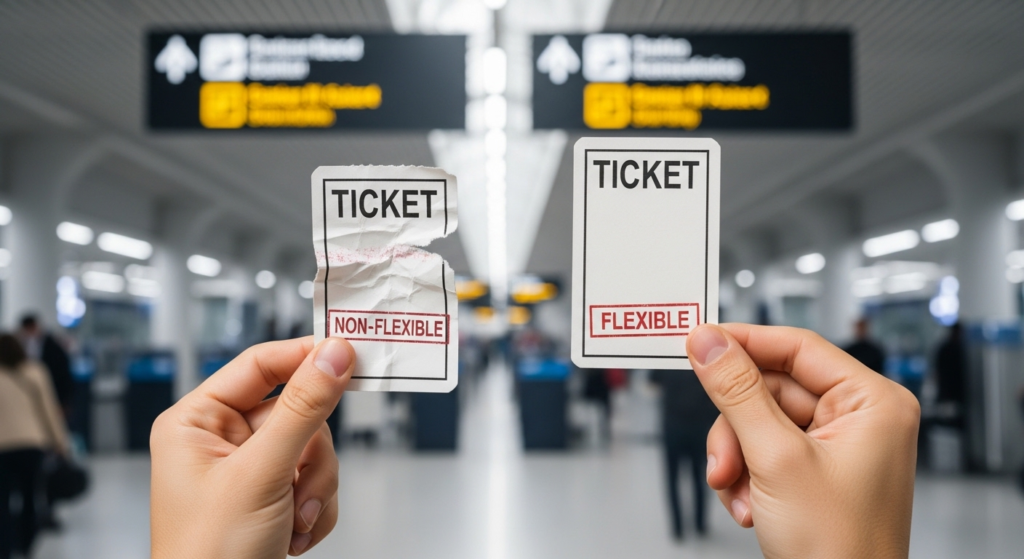
There are a few myths surrounding flexible tickets that are worth clearing up before you make your decision.
Myth #1: All business class tickets are fully refundable. Not necessarily. While most premium cabin fares come with flexible conditions, some promotional business class fares are non-refundable. Always check the fare rules cabin class and fare flexibility are separate things.
Myth #2: Flexible means free changes forever. Most flexible fares allow unlimited changes, but you’re still responsible for fare differences. If you change to a more expensive flight, you’ll pay the price gap.
Myth #3: Travel insurance makes flexible tickets unnecessary. Travel insurance is excellent protection, but it only pays out under specific covered circumstances like illness or bereavement. A flexible ticket lets you change plans for any reason no documentation required.
Myth #4: Only expensive airlines offer flexible fares. Budget carriers like easyJet, Ryanair, and Air Arabia now offer their own versions of flexible fares. They may not match the generosity of full service carriers, but options do exist across the price spectrum.
If you’re travelling internationally and unsure about visa timing or documentation, you may also want to read common reasons for visa rejection before booking non refundable tickets.
Final Verdict: Should You Buy a Flexible Flight Ticket
A flexible flight ticket is one of the smartest investments a traveller can make when their schedule is genuinely uncertain. Yes, it costs more upfront sometimes significantly more but the financial and psychological protection it offers can far outweigh that premium when plans inevitably shift.
For business travelers, frequent flyers, families, and anyone embarking on a high-value trip, the answer is almost always yes. For budget-conscious leisure travelers with firm, low-risk plans, a standard non-refundable fare combined with comprehensive travel insurance may serve just as well.
The key takeaway is this: flexibility in travel is not a luxury it’s a form of financial protection. The more uncertain your schedule, the higher the value of a ticket that bends to your life rather than forcing your life to bend to it.
Before your next booking, take five minutes to compare the flex fare price against the standard fare, consider your schedule’s unpredictability, and make an informed decision. You’ll thank yourself later especially the next time your plans change at the last minute.