
Air Canada Cabin Baggage Rules 2026: Carry-On Size, Weight Limit, Allowance, Fees & Economy Basic Changes
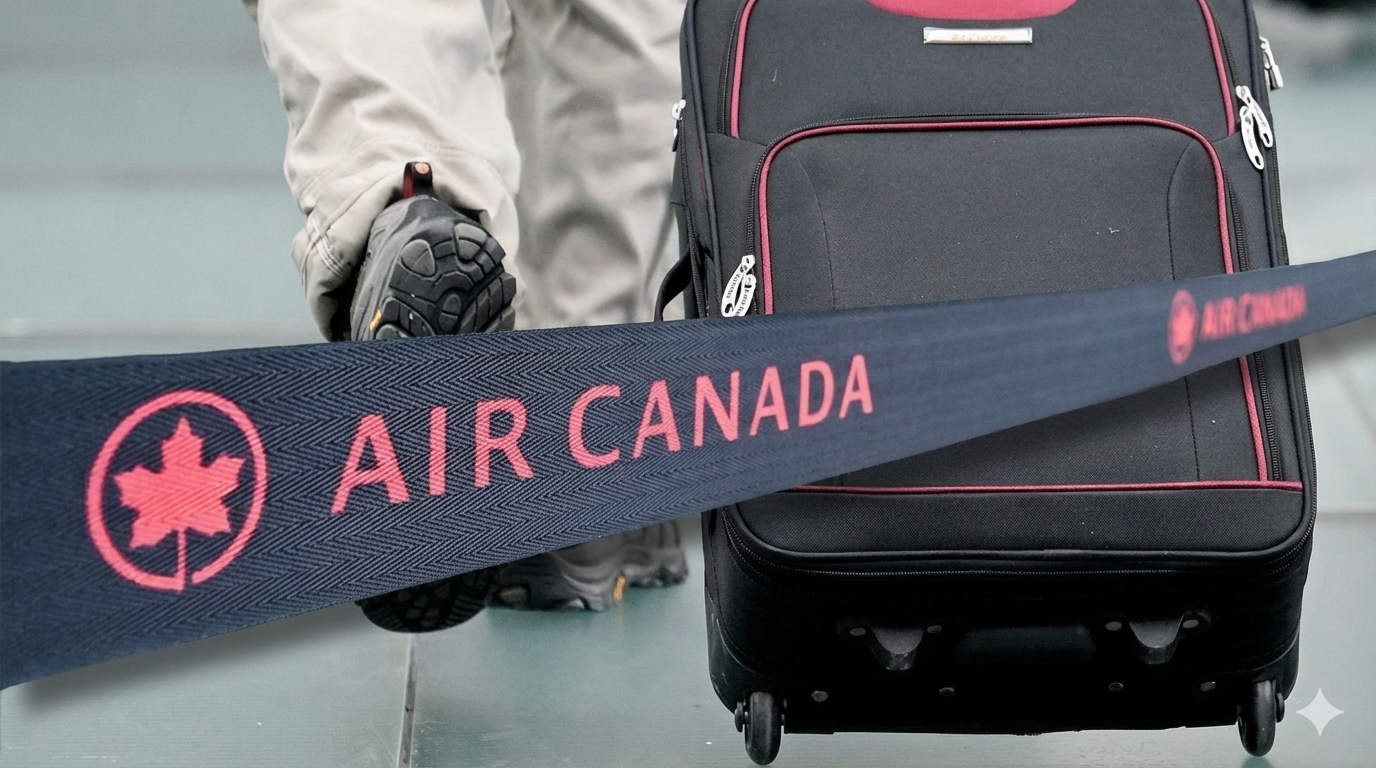
Air Canada Cabin Baggage Rules 2026: Carry-On Size, Weight Limit, Allowance, Fees & Economy Basic Changes
Air Canada cabin baggage refers to all items you are permitted to bring inside the aircraft cabin, not checked into the cargo hold. This includes one cabin bag (often called a carry-on) and one personal item, provided your fare allows both.
Many travelers assume cabin baggage rules are the same for every ticket. That is no longer true. Economy Basic fares, route type, and ticket conditions now play a major role in what qualifies as allowed cabin baggage on Air Canada flights.
What Counts as Cabin Baggage on Air Canada?
Cabin baggage on Air Canada consists of two possible items, depending on your fare:
- Cabin bag (standard cabin baggage item)
Stored in the overhead bin - Personal item
Stored under the seat in front of you
Both items must meet strict size limits, and neither has a published weight limit. However, you must be able to handle and stow them safely without assistance.
Air Canada Cabin Baggage Size & Handling Rules
Air Canada regulates cabin baggage primarily by size and safe handling, not by weight. Understanding these limits is essential, because cabin baggage that does not comply may be gate-checked or refused.
Cabin Bag (Main Cabin Baggage Item)
This is the larger piece of cabin baggage placed in the overhead bin. Many travelers call it a “carry-on,” but Air Canada treats it as part of the overall cabin baggage allowance.
Cabin Bag Size Rules
| Rule | Details |
|---|---|
| Maximum size | 21.5 × 15.5 × 9 in |
| Metric equivalent | 55 × 40 × 23 cm |
| Includes | Wheels, handles, outer pockets |
| Storage location | Overhead bin |
| Weight rule | No fixed limit |
| Handling requirement | Must be lifted unassisted |
Personal Item (Secondary Cabin Baggage Item)
The personal item is the smaller part of your cabin baggage allowance. It must fit completely under the seat in front of you and remain within size limits at all times.
Personal Item Size Rules
| Rule | Details |
|---|---|
| Maximum size | 17 × 13 × 6 in |
| Metric equivalent | 43 × 33 × 16 cm |
| Storage location | Under-seat |
| Typical examples | Laptop bag, purse, small backpack |
| Weight rule | No fixed limit |
Air Canada Cabin Baggage Allowance (Complete Overview)
Air Canada cabin baggage includes everything you are allowed to bring into the aircraft cabin, not checked into the cargo hold. For most fares, this means one cabin bag placed in the overhead bin and one personal item placed under the seat. However, the exact allowance depends on your fare type and route.
On Economy Basic fares, cabin baggage is often limited to a personal item only, while higher fares usually include both a cabin bag and a personal item. There is no fixed weight limit, but all cabin baggage must be light enough for you to handle and stow safely without assistance.
Cabin Baggage Allowance Summary
| Cabin Baggage Item | Size Limit (in) | Size Limit (cm) | Included by Default |
|---|---|---|---|
| Cabin bag (overhead) | 21.5 × 15.5 × 9 | 55 × 40 × 23 | Fare-dependent |
| Personal item (under-seat) | 17 × 13 × 6 | 43 × 33 × 16 | Always included |
Economy Basic Fare: Cabin Baggage Restrictions Explained
Economy Basic fares have restricted cabin baggage access on many routes, especially within Canada and the United States. This is where most confusion occurs.
On these fares, cabin baggage is often limited to a personal item only. The standard cabin bag is not included unless you pay an additional fee.
Cabin Baggage by Fare Type
| Fare Type | Cabin Bag (Overhead) | Personal Item |
|---|---|---|
| Economy Basic | Not included on many routes | Included |
| Standard | Included | Included |
| Comfort | Included | Included |
| Flex | Included | Included |
| Latitude | Included | Included |
This means Economy Basic passengers technically still have cabin baggage, but it is restricted to a single personal item.
Cabin Baggage vs Checked Baggage: Why the Difference Matters
The difference between cabin baggage and checked baggage matters because it affects cost, convenience, time, and what you can access during your flight. Many travelers confuse the two and end up paying unnecessary fees or having bags taken at the gate.
Cabin baggage includes the items you bring inside the aircraft cabin, such as a cabin bag (overhead item) and a personal item (under-seat item). These bags stay with you throughout the journey.
Checked baggage, on the other hand, is handed over at check-in, stored in the aircraft’s cargo hold, and collected at baggage claim after landing.
The choice between cabin baggage and checked baggage often comes down to fare type, trip length, and airline fees. On restricted fares like Economy Basic, travelers often rely on cabin baggage to avoid checked baggage charges, which is why understanding the difference is essential.
Key Differences Between Cabin Baggage and Checked Baggage
| Feature | Cabin Baggage | Checked Baggage |
|---|---|---|
| Where it goes | Inside the aircraft cabin | Aircraft cargo hold |
| Includes | Cabin bag + personal item (fare-dependent) | One or more large suitcases |
| Access during flight | Yes | No |
| Size limits | Strict and smaller | Larger but regulated |
| Weight rules | No fixed limit, must lift unassisted | Fixed limit (50 lb / 23 kg per bag) |
| Fees | Usually included on higher fares | Often charged on Basic/Standard fares |
| Risk of delay or loss | Very low | Possible |
| Ideal for | Short trips, essentials, avoiding fees | Longer trips, bulky items |
Why This Difference Is Important for Air Canada Passengers
Packing strategy:
Knowing the difference helps you decide what to pack where and what to keep with you.
Cost control:
Cabin baggage can help you avoid checked baggage fees, especially on Economy Basic fares.
Time savings:
Traveling with cabin baggage only allows you to skip baggage claim.
Fare restrictions:
Some fares limit cabin baggage, forcing passengers to check bags unexpectedly.
Cabin Baggage Weight & Size Limits (All Routes)
Air Canada applies the same cabin baggage size and handling rules on all routes, whether you are flying within Canada, to the United States, or internationally. Cabin baggage refers only to the items you bring inside the aircraft cabin, which include a cabin bag (overhead item) and a personal item (under-seat item).
Unlike checked baggage, Air Canada does not publish a fixed weight limit for cabin baggage. Instead, cabin baggage is regulated by size limits and safe handling requirements, which are enforced at the gate and during boarding.
Standard Cabin Baggage Size Limits
Air Canada allows cabin baggage only within strict size limits to ensure it fits safely in the cabin. All measurements include wheels, handles, and outer pockets.
| Cabin Baggage Type | Maximum Size (inches) | Maximum Size (cm) | Storage Location |
|---|---|---|---|
| Cabin bag (overhead item) | 21.5 × 15.5 × 9 | 55 × 40 × 23 | Overhead bin |
| Personal item | 17 × 13 × 6 | 43 × 33 × 16 | Under seat |
If your cabin baggage exceeds these dimensions, it may be gate-checked, even if your fare includes cabin baggage.
Is There a Weight Limit for Air Canada Cabin Baggage?
Air Canada does not specify a numerical weight limit for cabin baggage. However, there is a strict handling rule:
- You must be able to lift your cabin bag into the overhead bin without assistance
If your bag appears too heavy or unsafe to stow, gate agents may:
- Require the bag to be checked
- Apply checked baggage fees if your fare does not include free checked luggage
This rule applies on all routes and all aircraft types.
Does Cabin Baggage Allowance Change by Route?
No. The size and handling rules for cabin baggage are the same on all Air Canada routes. What can change is:
- Whether your fare includes a cabin bag
- Whether you are limited to a personal item only
- Whether additional fees apply
For example, Economy Basic fares on many routes allow only a personal item, even though the size rules themselves remain unchanged.
Economy Class Cabin Baggage Allowance (Canada Domestic)
For domestic flights within Canada, cabin baggage allowance depends mainly on your fare type. While most Economy fares include both a cabin bag (overhead item) and a personal item, Economy Basic fares often restrict cabin baggage to a personal item only.
This is why many domestic Economy Basic travelers are surprised at the gate. If you bring a standard cabin bag on a restricted Basic fare, you may be required to pay a fee or check the bag.
| Fare Type | Cabin Bag (Overhead) | Personal Item |
|---|---|---|
| Economy Basic | Not included on many routes | Included |
| Economy Standard | Included | Included |
| Comfort | Included | Included |
| Flex | Included | Included |
| Latitude | Included | Included |
Key takeaway:
On domestic Canada routes, cabin baggage restrictions apply mainly to Economy Basic fares, not higher Economy fares.
Economy Class Cabin Baggage Allowance: Canada ↔ United States
On flights between Canada and the United States (including Alaska and Hawaii), cabin baggage rules closely mirror domestic Canada rules. The biggest difference again comes down to Economy Basic fares, which often exclude the standard cabin bag.
If you are flying Economy Basic between Canada and the U.S., you should plan to travel with a personal item only, unless you are willing to pay extra.
| Fare Type | Cabin Bag (Overhead) | Personal Item |
|---|---|---|
| Economy Basic | Not included on many routes | Included |
| Economy Standard | Included | Included |
| Comfort | Included | Included |
| Flex | Included | Included |
| Latitude | Included | Included |
Important note:
Even though size rules for cabin baggage stay the same, allowance differs by fare, which is what causes most confusion for travelers.
Economy Class Cabin Baggage Allowance: Other International Destinations
For international routes beyond the U.S., cabin baggage rules are generally more generous, but still depend on fare type and ticket issue date.
In most cases:
- Standard, Comfort, Flex, and Latitude fares include both a cabin bag and a personal item
- Economy Basic fares may still restrict the cabin bag, depending on route and booking conditions
Unlike checked baggage, cabin baggage does not usually incur route-based fees, but restrictions may force you to check a bag if your fare does not include a cabin bag.
Cabin Baggage Allowance on International Routes
| Fare Type | Cabin Bag (Overhead) | Personal Item |
|---|---|---|
| Economy Basic | Route-dependent (often restricted) | Included |
| Economy Standard | Included | Included |
| Comfort | Included | Included |
| Flex | Included | Included |
| Latitude | Included | Included |
What travelers should know:
International Economy Basic tickets are the most inconsistent. Always verify your cabin baggage allowance before departure.
Why These Cabin Baggage Differences Matter
Cabin baggage differences matter because they directly affect how much you pay, how you pack, and what happens at the airport. Many travelers assume cabin baggage rules are the same for all tickets, but on Air Canada, fare-based restrictions can change what you are allowed to bring into the cabin.
If you book a fare that does not include a cabin bag, such as Economy Basic on many routes—you may be required to pay at the gate, check your bag unexpectedly, or repack at the airport. These situations often cause delays, stress, and additional costs that could have been avoided with advance planning.
Understanding these differences helps you make better decisions before you travel.
Medical Equipment, Sports Items, and Other Special Cabin Items on Air Canada
Not all cabin baggage is standard luggage. Air Canada allows certain medical devices, assistive equipment, and small personal items to be carried into the cabin under specific conditions. Sports items and oversized personal items usually follow separate handling rules, and many are not allowed as cabin baggage due to size and safety limits.
Understanding what qualifies as cabin baggage, and what does not, helps you avoid last-minute gate issues.
Medical Equipment Allowed as Cabin Baggage
Air Canada allows essential medical and assistive devices in the cabin when they are required for your health or mobility. These items are generally not counted against your standard cabin baggage allowance, as long as they meet safety requirements.
| Medical Item | Cabin Allowance | Notes |
|---|---|---|
| CPAP machine | Allowed | Usually does not count as cabin baggage |
| Portable oxygen concentrator (POC) | Allowed | Must meet airline approval and battery rules |
| Mobility aids (small assistive devices) | Allowed | Subject to cabin space and safety |
| Medication and medical supplies | Allowed | Keep in original packaging when possible |
Important points:
- Medical items must fit safely in the cabin
- Batteries for medical devices must comply with safety regulations
- Documentation may be required for certain devices
Always inform Air Canada in advance if you are traveling with medical equipment.
Sports Items and Cabin Baggage Rules
Most sports equipment does not qualify as cabin baggage because it exceeds size limits or poses safety risks. Small sports items may be allowed only if they fit within standard cabin baggage dimensions.
| Item Type | Allowed in Cabin? | Notes |
|---|---|---|
| Small sports accessories (gloves, shoes) | Yes | Must fit in cabin baggage |
| Skateboards (small, standard size) | Sometimes | Must fit size limits and crew approval |
| Tennis rackets | Usually no | Often exceed cabin size |
| Golf clubs, skis, snowboards | No | Must be checked |
| Bicycles | No | Special handling required |
Sports equipment that does not meet cabin size limits must be checked or shipped separately, often with additional fees.
Musical Instruments and Fragile Items
Small musical instruments may be carried as cabin baggage only if they fit within standard cabin baggage dimensions or can be safely stowed under the seat.
| Instrument Type | Cabin Eligibility |
|---|---|
| Small instruments (violin, flute) | Allowed if size-compliant |
| Medium instruments (guitar) | Usually must be checked or require seat purchase |
| Large instruments | Not allowed as cabin baggage |
Fragile items should be packed securely and, if possible, carried as part of your cabin baggage rather than checked.
Child and Infant Items as Cabin Baggage on Air Canada
Air Canada allows several child and infant-related items in the cabin to support parents traveling with babies and young children. Some items are allowed in addition to standard cabin baggage, while others must meet normal cabin size rules or be checked.
What you can bring depends on:
- The child’s age
- Whether the child has their own seat
- The type and size of the item
Understanding these rules helps parents avoid confusion at security and boarding.
Baby and Child Items Allowed in the Cabin
Parents traveling with infants or young children are usually allowed to bring essential care items into the cabin, provided they can be safely stowed.
| Child Item | Allowed in Cabin? | How It’s Treated |
|---|---|---|
| Diaper bag | Yes | Usually counts as cabin baggage unless stated otherwise |
| Baby food, formula, breast milk | Yes | Exempt from standard liquid limits (screened separately) |
| Baby bottles | Yes | Must be presented at security |
| Child medications | Yes | Keep accessible and labeled |
| Infant comfort items (blanket, toy) | Yes | Must fit within cabin baggage |
Important:
Diaper bags are not always extra. On many fares, they count as part of your cabin baggage allowance unless Air Canada specifies otherwise for your booking.
Cabin Baggage Rules for Infants Without a Seat
If an infant is traveling on an adult’s lap, cabin baggage rules are more limited.
What to expect:
- The infant does not receive a full cabin baggage allowance
- Parents may still bring essential infant items
- Larger items must fit within the adult’s allowance
Parents should prioritize essentials only in the cabin when traveling with a lap infant.
Cabin Baggage Rules for Children With Their Own Seat
If a child has their own paid seat, they are generally entitled to:
- Their own cabin baggage allowance, based on the fare purchased
- A personal item and possibly a cabin bag, depending on fare type
This is especially useful for longer flights, where children need access to food, entertainment, and comfort items.
8 Common Cabin Baggage Mistakes on Air Canada
Most cabin baggage issues on Air Canada do not happen because rules are unclear—they happen because travelers assume the rules are the same for every ticket. Small misunderstandings often lead to gate checks, extra fees, or rushed repacking at the airport.
Knowing these common mistakes helps you avoid unnecessary stress and travel with confidence.
1. Assuming All Fares Include a Cabin Bag
Many passengers believe every ticket includes a cabin bag. On Air Canada, Economy Basic fares on many routes allow only a personal item. Bringing a cabin bag on these fares can result in fees or forced gate-checking.
2. Confusing Cabin Baggage With Checked Baggage
Some travelers mix up cabin baggage and checked baggage rules. Cabin baggage goes inside the aircraft, while checked baggage goes into the cargo hold. Cabin baggage has stricter size limits, even though it may seem more convenient.
3. Ignoring Wheels, Handles, and Outer Pockets
Air Canada measures cabin baggage including wheels, handles, and external pockets. Bags that fit the frame size but bulge once packed often exceed the allowed dimensions and fail size checks.
4. Packing Cabin Bags Too Heavy to Lift Safely
There is no fixed weight limit for cabin baggage, but you must lift your cabin bag into the overhead bin without assistance. Bags that are too heavy may be taken away at the gate, even if they meet size rules.
5. Overpacking the Personal Item
Personal items must fit completely under the seat. Overfilled backpacks or laptop bags often exceed the allowed size and may be treated as cabin bags, which can cause issues on restricted fares.
6. Relying on “Carry-On Size” Labels From Luggage Brands
Luggage marketed as “carry-on size” does not always match Air Canada’s cabin baggage limits. Always check the actual measurements, not the product label.
7. Forgetting About Fare and Route Differences
Cabin baggage allowance can vary by fare type and route. A bag allowed on one Air Canada flight may not be allowed on another if the fare or destination is different.
8. Waiting Until the Airport to Check Cabin Baggage Rules
Many issues could be avoided by checking cabin baggage rules before leaving home. Airport enforcement is stricter, and options are limited once you reach the gate.
Frequently Asked Questions About Air Canada Cabin Baggage
Does Air Canada allow cabin baggage on all Economy Basic tickets?
No. On many Canada and U.S. routes, Economy Basic fares allow only one personal item. A standard cabin bag is often not included and may require a fee or be checked at the gate. Always check your booking details before departure.
Can Air Canada take my cabin bag at the gate even if it meets the size rules?
Yes. Even if your cabin bag meets size limits, Air Canada may gate-check it due to limited overhead bin space, aircraft type, or boarding conditions. This is common on full or regional flights.
Is cabin baggage measured strictly on Air Canada?
Yes. Air Canada measures cabin baggage including wheels, handles, and outer pockets. Bags that bulge or slightly exceed limits may fail sizing checks, especially at busy airports.
Do Air Canada cabin baggage rules change for international flights?
The size and handling rules stay the same, but cabin baggage allowance may change by fare type and route. Economy Basic fares on some international routes may still restrict cabin bags, depending on ticket conditions.
Can I bring a backpack instead of a cabin bag on Air Canada?
Yes. A backpack is allowed as cabin baggage if it fits within the cabin bag size limits or personal item limits, depending on how you use it. Oversized backpacks may be treated as cabin bags or refused.
Does Air Canada allow two personal items instead of a cabin bag?
No. Air Canada allows one personal item only. You cannot replace a cabin bag with two personal items, even if both fit under the seat.
Is a laptop bag counted as cabin baggage?
Yes. A laptop bag is considered a personal item and counts toward your cabin baggage allowance. It must fit under the seat and meet personal item size limits.
Can duty-free shopping bags be carried as cabin baggage?
Yes, but duty-free bags must fit within your cabin baggage allowance. They do not count as an extra item and may be refused if you already have the maximum allowed items.
Are cabin baggage rules different on Air Canada Express or Rouge flights?
The same cabin baggage size rules apply, but overhead space is often more limited on Air Canada Express (Jazz) aircraft. Cabin bags are more likely to be gate-checked on these flights.
Can I bring food in my cabin baggage on Air Canada?
Yes. Solid food items are allowed in cabin baggage. Liquids and gels must comply with security rules unless they are baby food or medically required.
Does Air Canada allow cabin baggage for infants without a seat?
Infants traveling on an adult’s lap do not receive a full cabin baggage allowance. Parents may bring essential baby items, but these usually count toward the adult’s cabin baggage allowance.
Can medical equipment be carried in addition to cabin baggage?
Yes. Essential medical equipment such as CPAP machines and approved medical devices are generally allowed in the cabin and may not count toward your cabin baggage limit, subject to safety rules.
What happens if my cabin bag is too heavy to lift?
If you cannot lift your cabin bag into the overhead bin without help, Air Canada staff may require it to be checked, even if it meets size limits.
Is cabin baggage guaranteed if my fare includes it?
No. Even if your fare includes cabin baggage, Air Canada does not guarantee overhead bin space. Cabin bags may still be gate-checked if space runs out.
How can I avoid cabin baggage problems on Air Canada?
- Check your fare’s cabin baggage allowance before travel
- Measure bags after packing
- Avoid rigid, fully packed suitcases
- Pack essentials in your personal item
- Be prepared for possible gate-checking

All Categories
Recent Posts

Best Time to Book International Flights in 2026

How to Avoid Airline Change Fees in 2026 (Smart Traveller Guide)

Tags