A boarding group on a flight is a number or letter assigned to passengers that determines the order in which they are allowed to board the aircraft. Airlines use this system to organize the boarding process, reduce crowding at the gate, and make the overall experience smoother for everyone on the plane.
Each passenger receives a boarding group at the time of ticket purchase, check-in, or based on their frequent flyer status. When your boarding group is called at the gate, that is your signal to walk down the jetway and find your seat. The system varies by airline, but the core purpose remains the same: board people in an organized sequence so the flight can depart on time.
Boarding Group on a Flight
A boarding group is a classification system airlines use to divide passengers into batches. Instead of letting everyone rush the gate at once, airlines call each group one at a time. This keeps the boarding lane clear and prevents a chaotic pile up near the aircraft door.
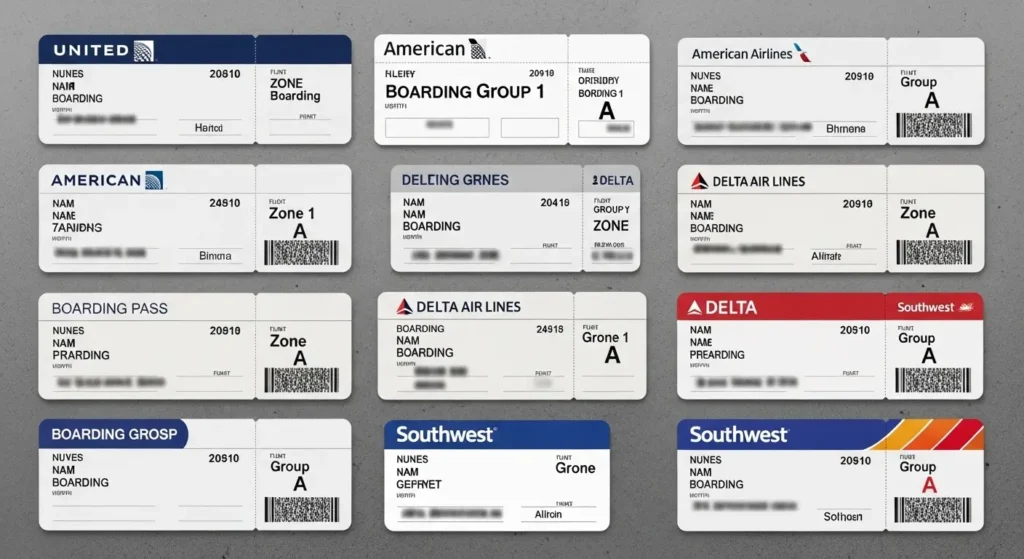
Your boarding group is printed directly on your boarding pass. It may appear as a number like Group 1, Group 2, or Group 5, or as a letter such as Zone A or Zone C. Some airlines like Southwest use a combination of letters and numbers such as A32 or B15.
The lower your group number or the earlier your zone letter, the sooner you board. Passengers in earlier groups get to settle in, store their carry-on bags in overhead bins, and avoid the last-minute scramble that later groups often face.
How Does the Boarding Group System Work on a Flight
Step 1: Group Assignment
Your boarding group is assigned based on several factors. Airlines consider your ticket class, loyalty status, whether you purchased a priority upgrade, and sometimes even your check-in time. Before any of this, it helps to know what information is needed to book a flight, since accurate passenger details at the time of booking directly affect how your boarding group is processed. First class and business class passengers almost always receive the earliest boarding priority.
Step 2: Gate Announcements
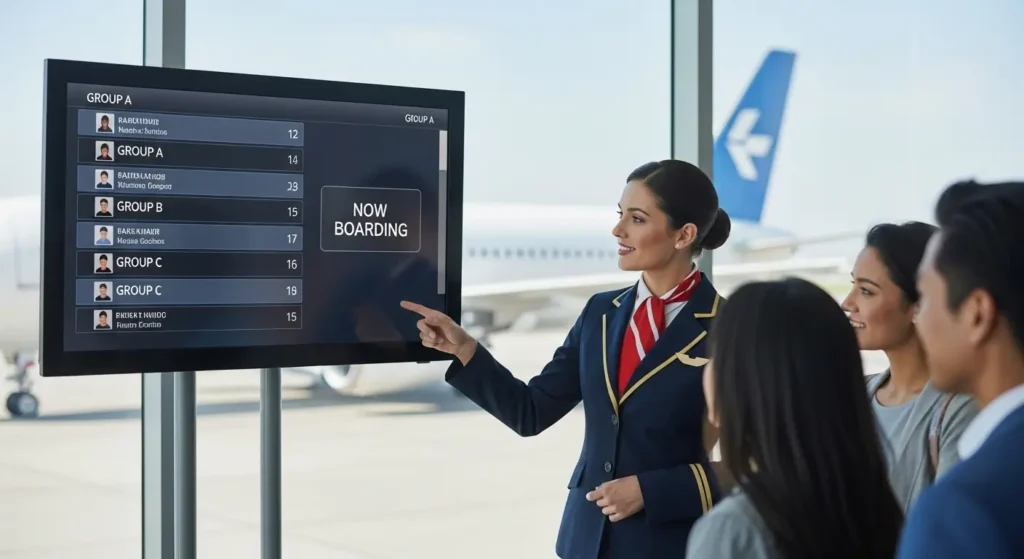
At the airport gate, an agent will begin boarding announcements in stages. They typically start with passengers who need extra time, such as families with young children or those requiring assistance. Then premium cabin passengers board, followed by elite frequent flyers and credit card priority holders.
Step 3: Economy Group Boarding
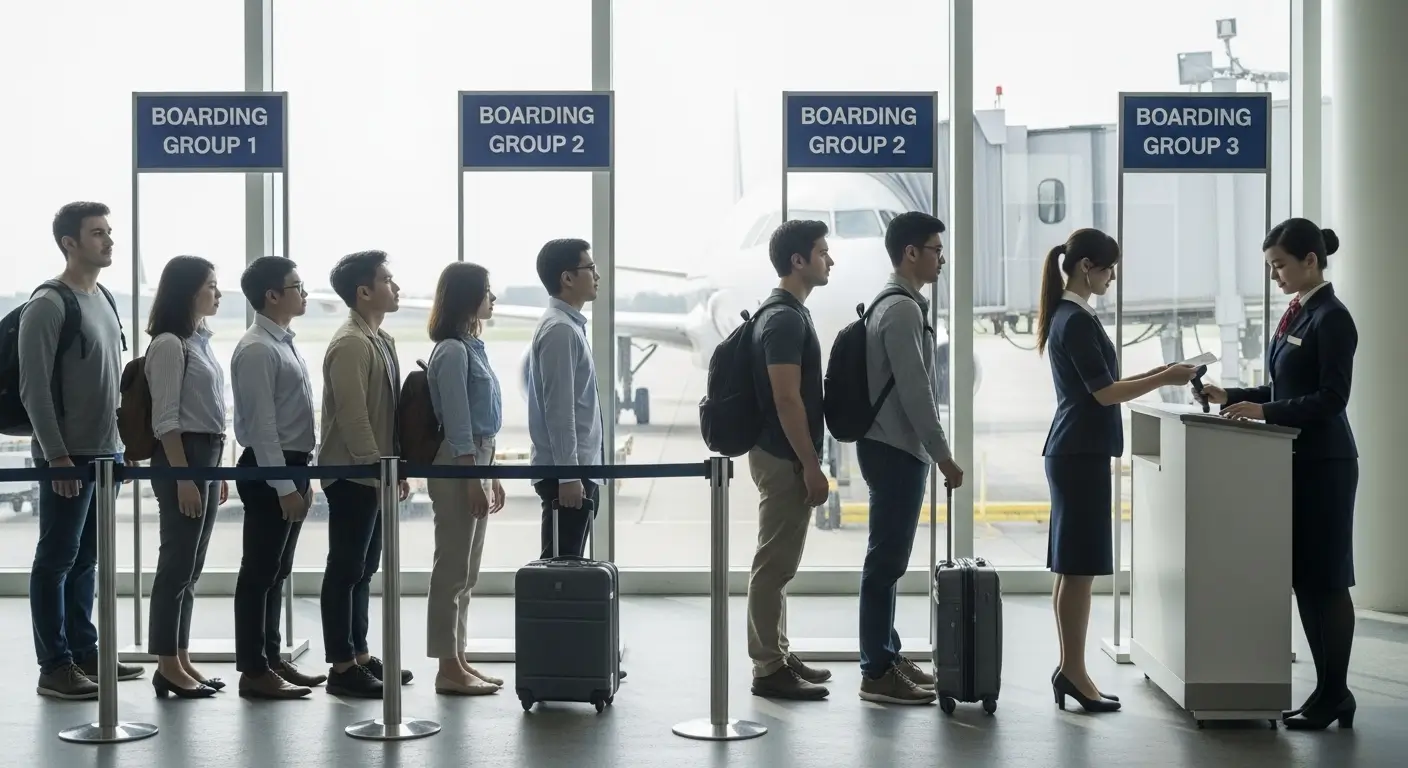
After all priority passengers are on board, the gate agent calls economy groups in order starting from Group 1 and moving through to the final group. Each group lines up in the designated boarding lane and boards when called.
Step 4: Scanning and Boarding
As you approach the gate, an agent scans your boarding pass. The system verifies that your group has been called. If you try to board before your group, you will typically be asked to step aside and wait until your turn.
Boarding Group Comparison Across Major Airlines
| Airline | Number of Groups | Priority Passengers | Group 1 Benefit |
|---|---|---|---|
| American Airlines | 9 Groups | ConciergeKey, Platinum Pro | Early overhead bin access |
| United Airlines | 5 Groups | Global Services, 1K | First class seating perk |
| Delta Air Lines | 7 Zones | Diamond Medallion | Dedicated boarding lane |
| Southwest Airlines | A, B, C + numbers | Business Select | Open seating advantage |
| Frontier Airlines | 4 Groups | Elite status holders | Pre-boarding access |
Key Factors That Determine Your Boarding Group on a Flight
Airlines use a mix of criteria to decide which boarding group you land in. Understanding these factors can help you plan better for your next trip.
- Ticket class: First class and business class passengers always board before economy.
- Frequent flyer status: Elite members such as Gold, Platinum, or Diamond tier receive priority boarding.
- Co branded credit cards: Many airline credit cards offer one group earlier boarding as a perk.
- Check in time: On airlines like Southwest, checking in the moment the window opens gets you a better position.
- Seat location: Some airlines assign earlier groups to passengers seated at the back of the plane to speed up the process.
- Paid upgrades: Airlines sell priority boarding as an add on, especially on budget carriers.
- Military or special needs status: Active military and passengers requiring assistance often pre-board.
How to Get a Better Boarding Group on a Flight
| Method | Cost | Boarding Improvement |
|---|---|---|
| Buy First or Business Class ticket | High | Board first, always |
| Earn elite status via miles | Effort and time | Priority boarding guaranteed |
| Use co-branded airline credit card | Annual fee | Move up 1 to 2 groups |
| Purchase priority boarding add-on | Low to moderate | Board earlier by 1 group |
| Check in exactly at window opening | Free | Better group on some airlines |
Real Examples of Boarding Groups at Major Airlines
American Airlines
American Airlines uses one of the most detailed boarding systems with up to nine groups. Pre-boarding includes customers needing assistance. Then comes Concierge Key and First Class, followed by Business, Platinum Pro, Platinum, Gold, and then the main cabin groups from 1 through 9. The more status you have, the earlier you board.
Southwest Airlines
Southwest takes a completely different approach. There are no assigned seats on Southwest flights. Instead, passengers receive a boarding position like A22 or B45. The earlier your position, the earlier you board and the better your seat selection. Business Select fares and A-List members get the best positions.
Delta Air Lines
Delta uses a zone based system with numbered zones from 1 to 7. Diamond Medallion and Platinum Medallion members board in Zone 1 alongside First Class. The system moves through Comfort Plus, Main Cabin 1, Main Cabin 2, and finally Basic Economy in the last zone.
Common Mistakes Passengers Make With Boarding Groups
Many travellers unknowingly make these mistakes that can lead to stress at the gate or a scramble for overhead bin space.
- Boarding before your group is called: Gate agents will send you back. Wait for your actual group announcement.
- Not knowing your group number: Check your boarding pass well before the gate opens so you are prepared.
- Arriving at the gate too late: If you arrive after the final group has boarded, you may face extra hassle and delays.
- Assuming all airlines use the same system: Every airline has its own boarding group logic. Learn the system for each airline you fly.
- Ignoring the boarding lane: Some airlines have separate lanes for different groups. Stand in the right lane to avoid confusion.
- Checking in late on Southwest: On Southwest, your boarding position is tied directly to check-in time. Late check-in means a bad boarding position and fewer seat choices.
Tips and Best Practices for Navigating Boarding Groups
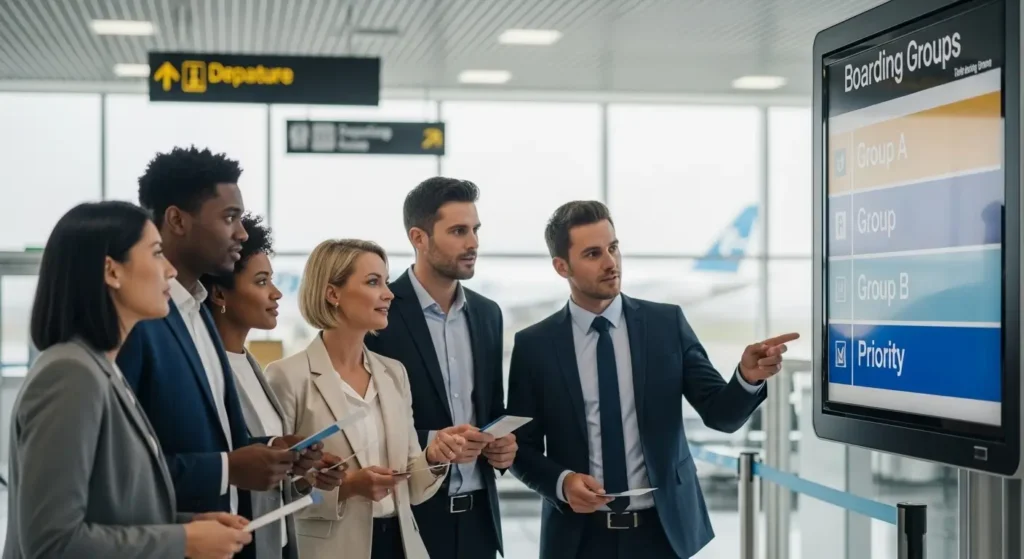
A few smart habits can make your airport experience noticeably better when it comes to boarding groups.
- Check in as early as possible. Most airlines open check in 24 hours before departure. Set a reminder and check in the moment it opens.
- Whether you prefer to do it from your phone or at the counter, understanding the pros and cons of online check in vs airport check in can help you decide the fastest way to secure a better boarding group. Download the airline app. Your boarding pass is easily accessible, and apps often update your boarding group in real time.
- Apply for an airline credit card. Many co branded cards offer one group earlier boarding at no extra effort, just pay your annual fee.
- Book refundable or higher fare classes when the price difference is small. Main cabin tickets often come with better boarding group assignments.
- Arrive at the gate 30 to 45 minutes early. Even if your group boards last, being present means less rushing and a calmer experience.
- Pack a personal item efficiently. If you board in a later group and overhead bins are full, a compact personal item under the seat saves you the hassle of gate checking a bag.
- Before you even get to the airport, reviewing the latest airline baggage policies and packing tips can help you pack smarter and avoid last minute surprises at the boarding gate.
- Consider purchasing priority boarding on budget airlines.
- Low cost carriers like Spirit or Frontier sell this add-on for a small fee, and it can make a real difference on a full flight.
Conclusion
Understanding how a boarding group on a flight works puts you in a much better position every time you travel. Whether you are flying domestic or international, the boarding group system shapes your entire gate and plane experience.
Key Takeaways
- A boarding group is a number or letter that tells you when to board the aircraft.
- Groups are assigned based on ticket class, elite status, credit card benefits, and check in time.
- Earlier boarding groups give you access to overhead bin space and a more relaxed boarding experience. Every airline has its own boarding group system, so it pays to understand the one you are flying with.
- You can improve your boarding group by earning elite status, using an airline credit card, checking in early, or purchasing a priority add on.
- Always wait for your group to be called. Boarding early will just get you sent back to the waiting area.
- On Southwest Airlines, your boarding position replaces a group number and is based entirely on check in time.
FAQs
1.What is a boarding group on a flight?
A boarding group is a number or category assigned to passengers that determines when they can board the plane. Airlines use boarding groups to organise passengers and avoid crowding at the gate.
2.How does boarding group work at the airport?
At the gate, airlines call passengers based on their boarding group number or priority. Group 1 boards first, followed by Group 2, and so on until all passengers are on board.
3.Where can I find my boarding group?
Your boarding group is printed on your boarding pass. You can find it on your mobile ticket or paper ticket, usually near your seat number or boarding zone.
4.What determines your boarding group?
Boarding group depends on several factors such as ticket class, frequent flyer status, seat type, and whether you paid for priority boarding.
5.Can I board earlier than my boarding group?
Generally, no. Airlines require passengers to board only when their group is called. However, passengers with special needs or priority access may board earlier.
6.Why do airlines use boarding groups?
Airlines use boarding groups to make the boarding process faster and more organised. It reduces congestion, improves efficiency, and helps flights depart on time.