

Transit vs transfer flight is one of the most searched travel questions, and for good reason. Many passengers use these two terms interchangeably, but they actually mean very different things in aviation. Knowing the difference can save you from missing a flight, losing your luggage, or even being denied entry to a country.
In simple terms, a transit flight means you stay on the same aircraft or remain airside at the airport without going through immigration. A transfer flight means you arrive at an intermediate airport, collect your baggage if required, go through immigration, and board a completely different flight. Understanding this distinction is essential for every traveler planning a multi-leg journey.
Transit vs Transfer Flight
Here is a side by side breakdown to help you instantly understand the key differences between a transit and a transfer flight.
| Feature | Transit Flight | Transfer Flight |
|---|---|---|
| Same aircraft | Usually yes | No, different aircraft |
| Immigration process | Not required (airside) | Usually required |
| Baggage handling | Checked through automatically | May need to reclaim and recheck |
| Boarding pass | Single pass for entire journey | Separate passes per leg |
| Time needed | Shorter stopover (1 to 3 hours) | Longer layover (2 to 5+ hours) |
| Visa requirement | Transit visa in some countries | Full entry visa often needed |
| Risk of missing flight | Lower | Higher if layover is short |
What is a Transit Flight
A transit flight happens when your plane makes a stopover at an intermediate airport before continuing to your final destination. In most cases, you remain on the same aircraft during this stop.
You do not go through immigration or customs during a transit. You simply wait in the transit area of the airport, which is located before the passport control checkpoint.
How Transit Works in Practice
Example: You fly from Karachi to London with a transit stop in Dubai. Your plane lands in Dubai, some passengers get off, new ones board, and then the same flight continues to London. You stay seated or wait in the airside lounge without ever entering the UAE.
Key features of a transit flight:
- You remain in the international airside zone
- No immigration or customs clearance needed
- Your checked baggage travels with you automatically
- Your original boarding pass covers the full journey
- Layover time is typically shorter, between 1 to 3 hours
What is a Transfer Flight
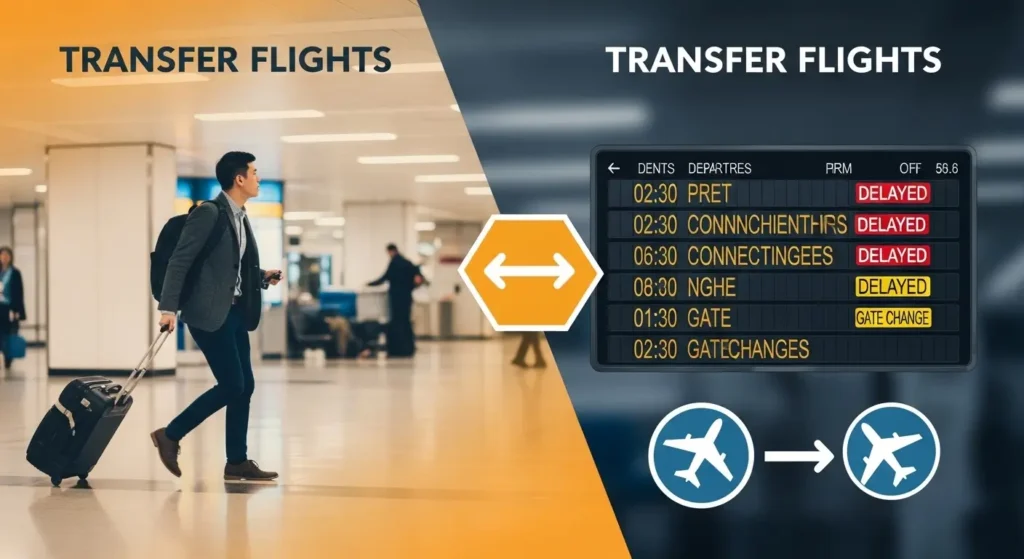
A transfer flight, also called a connecting flight, requires you to disembark your first aircraft and board a separate aircraft for the next leg of your journey. This is the more common experience for travellers booking multi-leg itineraries.
During a transfer, you may or may not need to pass through immigration depending on your destination, citizenship, and the airport you are connecting through. If you are unsure about the process at your layover airport, it helps to read a detailed guide on where you go through customs on a connecting flight so you know exactly what to expect before you land.
How a Transfer Flight Works in Practice
Example: You fly from Lahore to New York with a connection in Istanbul. You land in Istanbul, exit the aircraft, collect your boarding pass for the next flight, go through any required security checks, and board a completely different aircraft to New York.
Key features of a transfer flight:
- You disembark and board a new aircraft
- You may need to clear immigration depending on the country
- Baggage may need to be reclaimed and rechecked
- You receive separate boarding passes for each leg
- Layover time is usually longer to allow sufficient connection time
Visa Requirements for Transit vs Transfer Flights
Visa rules are one of the most critical differences between transit and transfer flights. Below is a general guide based on common travel scenarios.
| Scenario | Transit Visa Needed | Notes |
|---|---|---|
| Transit through UK (airside) | Yes for some nationalities | Depends on passport and route |
| Transit through Dubai (airside) | No for most nationalities | Stay within the secure zone |
| Transfer through USA (clearing customs) | Yes, full US visa or ESTA required | USA requires entry even for connections |
| Transfer through Canada | Yes, transit visa or eTA needed | Even for airside connections |
| Transfer through Schengen Zone | Schengen visa if entering | Required if leaving the secure zone |
| Transit through Qatar (airside) | No for most nationalities | Qatar Airways hub at Hamad Airport |
Key Rules and Factors That Affect Transit vs Transfer Flights
Minimum Connection Time
Every airport sets a Minimum Connection Time (MCT), which is the shortest time allowed between two flights. If your layover is shorter than the MCT, the airline will not let you book those flights together.
- Short haul to short haul MCT is usually 45 to 60 minutes
- International to international MCT is usually 90 to 120 minutes
- Airports like London Heathrow have MCTs of up to 90 minutes
Same Airline vs Different Airlines
If both legs of your journey are on the same airline or a codeshare partner, your baggage is usually checked through automatically. If you are connecting across different airlines, you may need to collect and recheck your bags.
Airside vs Landside
Airside means you are past security and passport control, within the secure international departure area. Landside is outside this area, accessible to the general public. Transit passengers stay airside. Transfer passengers who clear immigration go landside.
Real World Scenarios: Transit vs Transfer in Action

Scenario 1: Pakistan to USA via Dubai
A passenger flying from Islamabad to New York via Dubai on Emirates will transit through Dubai. They stay airside, do not go through UAE immigration, and their bags are automatically transferred. However, they will need to clear US Customs and Border Protection upon arrival in New York.
Scenario 2: Pakistan to UK via Istanbul
A Pakistani passport holder flying Islamabad to London via Istanbul on Turkish Airlines may need a UK transit visa depending on whether they are connecting airside or entering the UK. This is a transfer flight where the passenger must be vigilant about visa requirements.
Scenario 3: Budget Travelers Booking Separately
Some travellers book two separate cheap flights to save money, which is known as a self-transfer. This comes with serious risks that most people overlook. Before booking separate tickets for a connection, it is worth understanding what a self transfer flight really means and what happens to your baggage, your rights, and your rebooking options if things go wrong.
If the first flight is delayed and you miss the second, the second airline has no obligation to rebook you. Always allow at least 3 hours for self-transfer connections and keep essential items in your carry-on at all times.
Common Mistakes Travelers Make with Transit and Transfer Flights
| Mistake | Why It Happens | How to Avoid It |
|---|---|---|
| Assuming no visa needed | Transit sounds simpler than it is | Check each country’s transit visa rules |
| Short layover on transfer flights | Trying to save time | Allow at least 2 hours for international transfers |
| Not rechecking bags on self-transfer | Thinking bags transfer automatically | Always confirm baggage policy per booking |
| Missing the connection gate | Large airports can be confusing | Check gate info immediately upon arrival |
| Not knowing MCT rules | Booking without checking connection time | Verify MCT for your connecting airport |
Tips and Best Practices for Smooth Transit and Transfer Flights

- On transfer flights where you change airlines or book separate tickets, you may need to collect and recheck your luggage at the connecting airport. Understanding how baggage rechecking works on connecting flights can save you a lot of confusion and help you plan your connection time accurately
- Always check the visa requirements for every country your flight passes through, including transit countries
- Book connecting flights on the same airline or within the same alliance to simplify baggage transfer
- Allow a minimum of 2 hours for international connections and 3 hours for self transfers
- Download your airline app and enable notifications to get real time gate change updates
- Keep your travel documents, passport, and boarding passes accessible at all times during your journey
- Inform the airline in advance if you have special needs or require assistance during your connection
- If your layover is over 8 hours, check if your airline offers free transit hotel accommodation
- Always keep essential items in your carry on in case your checked baggage is delayed during a transfer
Conclusion
Understanding the difference between transit vs transfer flight is not just a matter of terminology. It has real consequences for your visa requirements, baggage handling, connection times, and overall travel experience.
Here are the most important points to remember:
- Transit means staying on the same plane or remaining airside without clearing immigration
- Transfer means boarding a different aircraft and potentially clearing immigration
- Always check visa requirements for every country your route passes through
- Book connecting flights on one itinerary to protect yourself from missed connections
- Allow generous connection time, especially for international transfers
- Self-transfers carry higher risk and require careful planning
- Baggage rules differ between transit and transfer bookings so always confirm in advance
Whether you are a frequent flyer or planning your first international trip, knowing how transit and transfer flights work will help you travel smarter, avoid costly mistakes, and reach your destination with less
FAQs
1.Is a transit flight safer than a transfer flight in terms of missing a connection
Yes, transit flights generally carry lower risk of missed connections since you remain on the same aircraft or in the same airside zone. Transfer flights require more time and involve more variables like clearing immigration and finding a new gate.
2.Do I need to collect my bags during a transit stop
Usually no. During a genuine transit where you stay airside and continue on the same or connected flight, your bags are automatically sent to your final destination. However, always confirm this with your airline when booking.
3.What happens if I miss my transfer flight due to a delay
If your flights are booked together under one itinerary, the airline is responsible for rebooking you on the next available flight at no extra charge. If you booked separately, the second airline has no obligation to help you.
4.Can I leave the airport during a long transit stopover
It depends on the country and your visa status. Some countries like Singapore, UAE, and Turkey offer free or low-cost transit visas to explore the city during a long layover. Always check local rules before making plans.
5.What is a stopover and how is it different from transit and transfer
A stopover is an intentional break in your journey lasting more than 24 hours. It is different from both transit and transfer, which are shorter connections. Some airlines allow free stopovers as part of long-haul itineraries.