
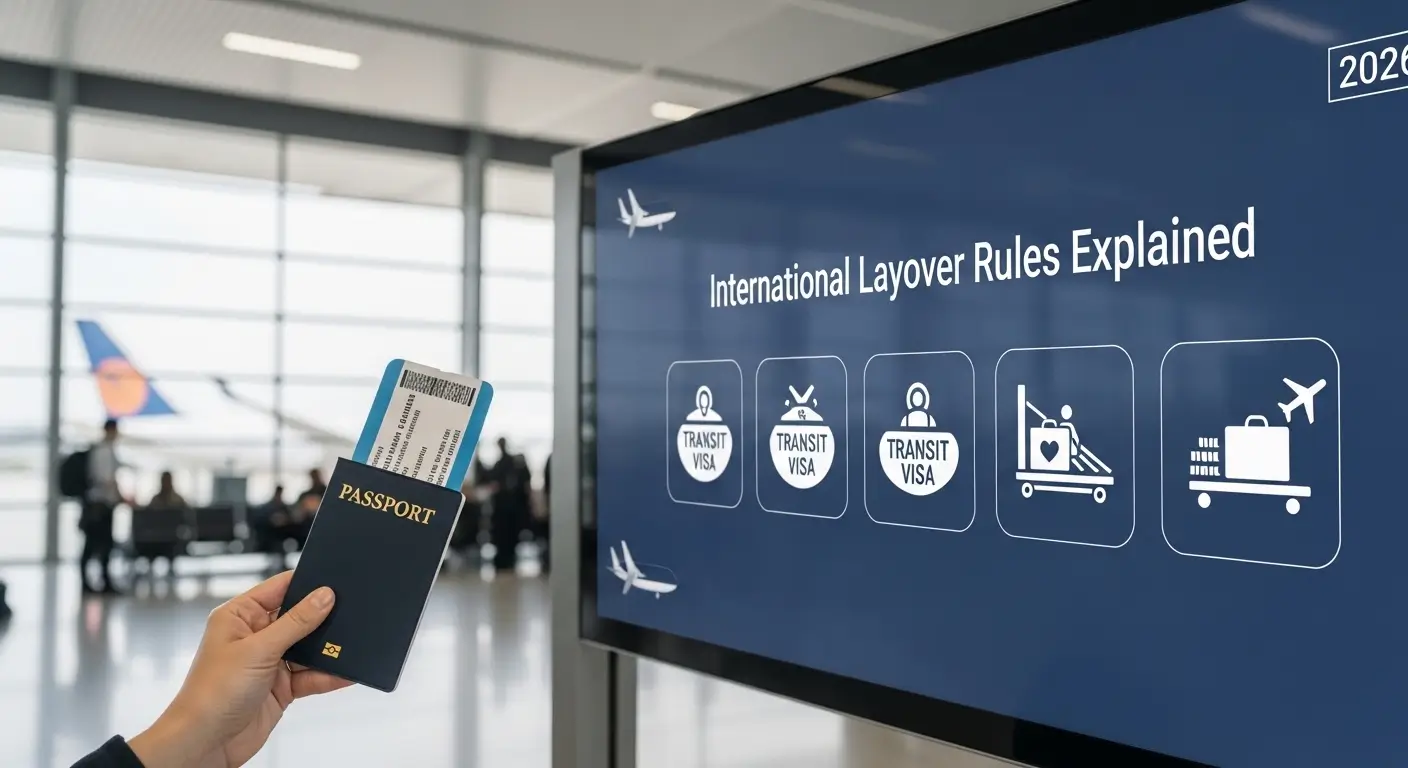
International layover rules govern what travelers must do when they stop at an airport in a third country before reaching their final destination. These rules cover whether you need a transit visa, how your baggage is handled between flights, and what rights you have while waiting inside or outside the airport. Understanding these rules is not just helpful but essential in 2026, since getting them wrong can result in being denied boarding, detained at immigration, or missing a connection entirely.
Every country has its own set of layover policies based on your nationality, your destination country, the airline you are flying, and the specific airport involved. Some travelers can transit freely without any visa. Others need to apply weeks in advance. Baggage rules also vary depending on whether your flights are on the same booking or separate tickets. This guide breaks down every major aspect of international layover rules so you can travel confidently and without surprises.
What Are International Layover Rules
A layover is a stop between two flights where you remain at the same airport. An international layover happens when this stop occurs in a country that is not your home country and not your final destination. International layover rules are the legal and airline policies that decide what you can and cannot do during this stop.
These rules are set by three different bodies working together: the immigration authority of the transit country, the airline operating your flights, and the destination country to which you are heading. All three have an influence on your layover experience.
Transit Visa
A transit visa is a special short term visa that allows travellers to pass through a country they are not visiting. Whether you need one depends entirely on your passport nationality, your destination, and the transit country. This is one of the most misunderstood parts of international travel in 2026. It is also worth noting that a weak application history is one of the most common reasons for visa rejection, so preparing your transit visa documents carefully is just as important as preparing for a full tourist visa.
You likely do NOT need a transit visa if:
- You hold a passport from a country that has a visa free agreement with the transit country
- You are staying airside (inside the international terminal) and not passing through immigration
- You hold a valid visa for the USA, UK, Canada, Australia, or Schengen area and are transiting through certain partner countries
- Your flights are on the same ticket and the airline handles the connection fully
- Your layover is under 24 hours and you remain inside the airport secure zone
You likely DO need a transit visa if:
- You are a national of a country on the transit country’s restricted list
- You want to leave the airport and explore the city during your layover
- Your layover exceeds a certain time threshold set by that country
- You are connecting from international to domestic flights and must pass through immigration
- Your destination country requires your transit country to verify your onward visa
Transit Visa Requirements by Major Hub Country (2026)
| Transit Country | Airside Transit Visa Required For | Visa Free Duration | Exit Allowed |
|---|---|---|---|
| United Kingdom | Nationals of ~50 countries including Pakistan, Nigeria, Sri Lanka | Up to 24 hrs airside | Requires Visit Visa |
| United Arab Emirates | Most nationalities transit visa-free airside | Up to 96 hours | Transit Visa Available |
| China (Beijing/Shanghai) | Nationals of 53 countries get 144-hr visa-free | 144 hours | Allowed |
| Schengen Area (EU) | Nationals of ~100 countries need Airport Transit Visa | Airside only unless Schengen visa held | Schengen Visa Required |
| United States | All nationalities except VWP countries need transit visa (C visa) | No set limit airside | B1/B2 or C1/D Visa Needed |
| Turkey (Istanbul) | Most nationalities can transit 24 hrs without visa | 24 to 72 hours | E Visa Available Online |
How Baggage Works During an International Layover
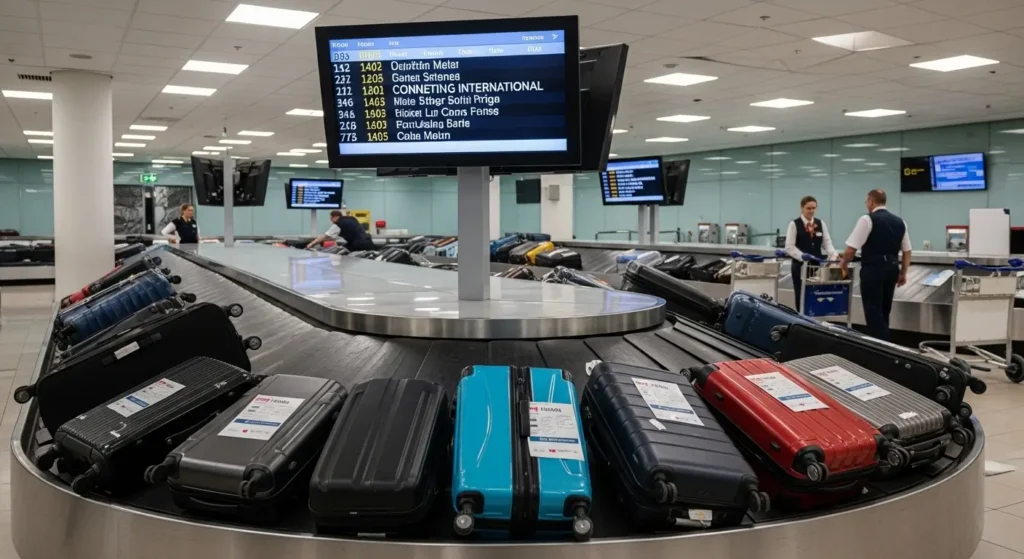
Baggage handling during international layovers is a source of enormous confusion for travellers. Whether your bags go through automatically or whether you need to collect and recheck them depends on several important factors. Before you travel, it is well worth reading a full breakdown of airline baggage policies and packing tips so you know exactly what each carrier allows and charges, which can affect how you pack for a trip involving multiple connections.
Your bags transfer automatically when:
- All your flights are on a single booking reference or ticket number
- The airlines involved have an interline or codeshare baggage agreement
- You checked in for all flights at your origin airport
- Your layover is at an airport where through checking is available
- The transit country does not require customs inspection of all baggage
You must collect and recheck your bags when:
- Your flights are booked on separate tickets with different booking references
- You are changing between airlines that have no baggage agreement
- You are arriving into the USA (CBP requires all international passengers to claim baggage)
- You are transiting through a country where customs clearance is mandatory
- You are switching from international to domestic flights midway through your journey
Baggage Rules at Major Transit Airports
| Airport | Through Baggage Available | Customs Clearance Required | Minimum Transfer Time |
|---|---|---|---|
| Dubai (DXB) | Yes, same airline or partner | No (airside only) | 60 minutes |
| London Heathrow (LHR) | Yes, with interline agreement | No (airside transit) | 60 to 90 minutes |
| New York JFK (JFK) | No, all passengers reclaim bags | Yes, mandatory | 3 hours recommended |
| Singapore Changi (SIN) | Yes, fully automated | No | 45 to 60 minutes |
| Frankfurt (FRA) | Yes, Schengen connecting flights | Only entering Schengen zone | 45 minutes minimum |
| Istanbul (IST) | Yes on same airline | No (airside) | 60 minutes |
Airside vs Landside

A layover falls into one of two categories based on where you are allowed to go. This distinction directly affects what you can eat, explore, or do while waiting for your next flight.
Airside means you stay within the secure, post immigration area of the airport. You do not enter the country officially. You wait in the international terminal with access to airport shops, lounges, restaurants, and gates. Most short layovers are airside and require no transit visa for most nationalities.
Landside means you exit the airport, pass through immigration, and enter the transit country temporarily. To go landside, you typically need either a visa or a visa-free arrangement between your country and the transit country. Going landside allows you to explore the city, stay in a hotel, and experience a destination even during a long connection.
Layover Duration
The length of your layover affects everything from visa requirements to hotel rights and meal vouchers from the airline. Here is what different layover lengths mean for a traveler in 2026.
Layover duration guidelines for international travelers:
- Under 2 hours: This is a tight connection. International travelers should generally avoid this unless the airline explicitly sells it as a valid connection and the airport is compact and familiar
- 2 to 5 hours: The standard short layover. Comfortable for most connections, enough time for a meal and a lounge visit but not enough to explore the city
- 5 to 12 hours: A mid-range layover where landside exploration becomes worth considering if you hold the right visa or are eligible for visa-free access
- 12 to 24 hours: A long layover that usually warrants a hotel stay, either airside or in the city itself, and allows for proper rest and sightseeing
- Over 24 hours: This is technically a stopover, not a layover. Airlines and immigration treat this differently and additional permissions or visas may apply
Your Rights During a Delayed or Cancelled Layover Flight
When a connecting flight is delayed or cancelled during an international layover, your rights depend on which leg of your journey was disrupted, which airline is responsible, and which country’s laws apply at the point of disruption.
What airlines are typically required to provide during disruptions:
Transportation between the airport and the hotel if accommodation is provided
Special Situations Every Transit Traveller Should Know

Transiting Through the United States
The United States has some of the strictest transit rules in the world. Every passenger arriving in the USA, even if their final destination is another country, must clear US Customs and Border Protection (CBP), collect their baggage, recheck it, and then proceed to their connecting gate. There are no airside connections in the USA. This means you need a valid US visa or qualify for the Visa Waiver Program even for a transit stop of just a few hours.
Transiting Through the Schengen Zone
The Schengen Area includes 27 European countries that share open borders internally. When you transit between two Schengen countries, it is treated as a domestic connection. However, if you are arriving from a non-Schengen country and your first stop is in the Schengen Zone, you will clear immigration there regardless of your final destination. Citizens of many countries require an Airport Transit Visa (ATV) to even remain airside in a Schengen airport.
Minors Traveling Alone
Unaccompanied minors have additional rules during international layovers. Most airlines require advance notice and charge a fee for supervised transit. Parents should confirm that the airline provides a staff escort during the layover and that the receiving airport has unaccompanied minor services available throughout the layover period.
General checklist before any international layover:
- Verify transit visa requirements for your specific passport on the IATA website or with your airline
- Confirm whether your baggage transfers automatically or requires reclaim and recheck
- Check the minimum connection time required at your transit airport
- Know whether you are staying airside or going landside and prepare accordingly
- Download your boarding passes for all flights before leaving home
- Carry printed copies of your onward ticket, hotel booking, and travel insurance
- Check whether your destination country requires you to show an onward ticket before boarding at the transit point
- Inform your bank that you will be transiting through a third country so your card is not blocked
Best Airports in the World for Long Layovers in 2026
Not all airports are equal when it comes to making your layover comfortable and productive. Some airports are genuinely designed to be destinations in themselves, offering travelers facilities that rival full resorts and city centers.
| Airport | Best Feature | Free Transit Hotel/Rest Zone | City Tour Available |
|---|---|---|---|
| Singapore Changi (SIN) | Jewel indoor waterfall, butterfly garden, cinema | Yes, 5+ hrs eligible | Free tour for 5.5+ hrs |
| Dubai (DXB) | Luxury lounges, spa, hotel towers airside | Day use rooms available | Visa on arrival for city |
| Doha Hamad (DOH) | Squash courts, sleep pods, art installations | Transit hotel available | Free Doha City Tour |
| Tokyo Haneda (HND) | Traditional Japanese experience zone, hot spring | Limited, booking needed | Visa required for most |
| Istanbul (IST) | Massive shopping mall, Turkish bath spa, cinema | Turkish Airlines free hotel | Free tour with TK |
Final Thoughts
International layover rules are not designed to confuse travelers. They exist to manage immigration, security, and airline logistics across multiple countries simultaneously. Once you understand the basic framework, which transit visas apply to you, how your baggage will be handled, and what your rights are if something goes wrong, an international layover becomes far less stressful and can even become one of the most interesting parts of a long journey.
The single best investment you can make before any international connection is 30 minutes of research on the specific transit country using your specific passport. Rules vary dramatically and a small amount of preparation can save you from significant problems at the airport. Fly informed, transit confidently, and make every layover work in your favour.