Whether you’re flying within Canada, to the United States, or internationally to Europe, Asia, Africa, or the Middle East, knowing your Air Canada Baggage Allowance, baggage weight limits, and excess baggage fees can help you avoid unexpected charges, delays, and frustration at the airport.
Carry-on: 1 bag (55×40×23 cm) + 1 personal item (43×33×16 cm). No weight limit.
Economy Basic on North American routes: personal item only — no carry-on bag.
Checked bag weight: 23 kg Economy, 32 kg Business/Premium Economy.
Max bag size: 158 cm total linear dimensions.
Overweight fee: CAD/USD $100–$120 for bags 23–32 kg in Economy.
Gate fee: CAD/USD $65 if a carry-on is checked at the boarding gate
Air Canada updated its checked baggage fees for Economy Basic, Standard, and Flex fares purchased on or after April 13, 2026, for travel to/from the US (including Alaska, Hawaii, Puerto Rico, and the US Virgin Islands), Mexico, the Caribbean, and Central America. If you purchased a ticket on or after this date, verify your fees at aircanada.com/baggage-fee-changes before travel.
The most important thing to know: Economy Basic has changed
The single biggest source of confusion about Air Canada baggage in 2026 is the Economy Basic carry-on restriction introduced in January 2025. Many passengers still do not know about it and are caught off guard at the airport.
For Economy Basic tickets purchased on or after January 3, 2025:
- You are entitled to one personal item only on flights within Canada, to/from the US (including Hawaii and Puerto Rico), and to/from Mexico, Central America, and the Caribbean
- A standard carry-on bag is not included on these routes
- If you bring a carry-on bag to the gate on a Basic fare, it will be checked for a gate fee of CAD/USD $65 plus tax — nearly double the standard checked bag fee
- Exception: if your Economy Basic itinerary connects onward to an international destination beyond North America, you may bring one carry-on and one personal item for the entire trip
Source: Air Canada — Carry-On Baggage
Economy Basic: check it before the gateIf you are on a Basic fare and need to check a bag, the standard counter fee is approximately CAD/USD $35 plus tax. The gate fee is $65 plus tax. Checking at the counter is always cheaper. Checking online before you arrive is cheapest of all.
Carry-on baggage allowance
Standard allowance (all fares except Economy Basic on North American routes)
| Item type | Maximum size | Weight limit |
|---|---|---|
| Standard carry-on bag | 55 × 40 × 23 cm (21.5 × 15.5 × 9 in) | None — must be stowable unaided |
| Personal item (handbag, laptop bag, small backpack) | 43 × 33 × 16 cm (17 × 13 × 6 in) | None |
Air Canada does not publish a weight limit for carry-on bags. However, the rule that applies in practice is that you must be able to lift and stow your bag in the overhead bin without assistance. If you cannot, crew may check the bag.
Both items are included at no charge on all Standard, Flex, Comfort, Latitude, Premium Economy, and Business Class fares on every route.
Checked baggage allowance
Size and weight limits — all passengers
| Limit | Standard | Oversize/overweight accepted? |
|---|---|---|
| Maximum size per bag | 158 cm (62 in) total linear (L+W+H, including handles and wheels) | 158–292 cm accepted for a fee |
| Maximum weight — Economy | 23 kg (50 lb) | 23–32 kg accepted for a fee |
| Maximum weight — Business / Premium Economy | 32 kg (70 lb) | Not accepted above 32 kg — must repack |
| Hard limit — no bag accepted | Over 32 kg (70 lb) or over 292 cm (115 in) | Must be sent via Air Canada Cargo |
If a bag is both overweight and oversized, only one fee applies — not two. Source: Air Canada — Baggage Fees and Optional Services
Free checked baggage by fare and route
| Fare type | Within Canada / Canada–US | International routes |
|---|---|---|
| Economy Basic | No free bags — fees apply | Varies by route — check your ticket |
| Economy Standard / Flex | No free bags — fees apply on most routes | 1 free bag included on many routes (Europe, Asia, South America) |
| Economy Comfort | 1 free bag | 1 free bag |
| Economy Latitude | 2 free bags | 2 free bags |
| Premium Economy (Lowest/Flex/Standard) | 2 free bags at 32 kg each | 2 free bags at 32 kg each |
| Business Class (Signature Class) | 2 free bags at 32 kg each | 2 free bags at 32 kg each |
International routes: always check your ticketAir Canada’s international baggage rules vary significantly by specific origin and destination, not just by region. The only reliable way to confirm your exact checked baggage allowance is to check your booking confirmation or use Air Canada’s checked baggage calculator at aircanada.com/baggage/checked.
Checked baggage fees
Canada / Canada–US routes (fees per direction)
| Bag | Fee (CAD/USD) | Notes |
|---|---|---|
| First checked bag | ~$30 | Free with Comfort, Latitude, Premium Economy, Business, or qualifying Aeroplan card |
| Second checked bag | ~$50 | Free with Latitude, Premium Economy, Business Class |
| Third and additional bags | $100–$120 | Per bag, per direction |
| Overweight bag (23–32 kg), Economy | $100–$120 | Per bag. Waived if both overweight and oversized — single fee applies |
| Bag checked at gate (Basic fare) | $65 + tax | Applies when carry-on not permitted on Basic fares and bag is brought to gate |
International routes (fees per direction)
| Bag | Fee (CAD) | Notes |
|---|---|---|
| First bag — Economy Basic or Aeroplan Standard Reward | $75–$90 | Most Standard/Flex/Comfort fares include a first bag free on many international routes |
| Second bag — most fares | $100–$120 | Free with Latitude, Premium Economy, Business Class |
| Third bag and above | $225–$270 | No additional overweight or oversize fee if this rate is paid |
| Overweight bag (23–32 kg), Economy | $100–$120 | Per bag |
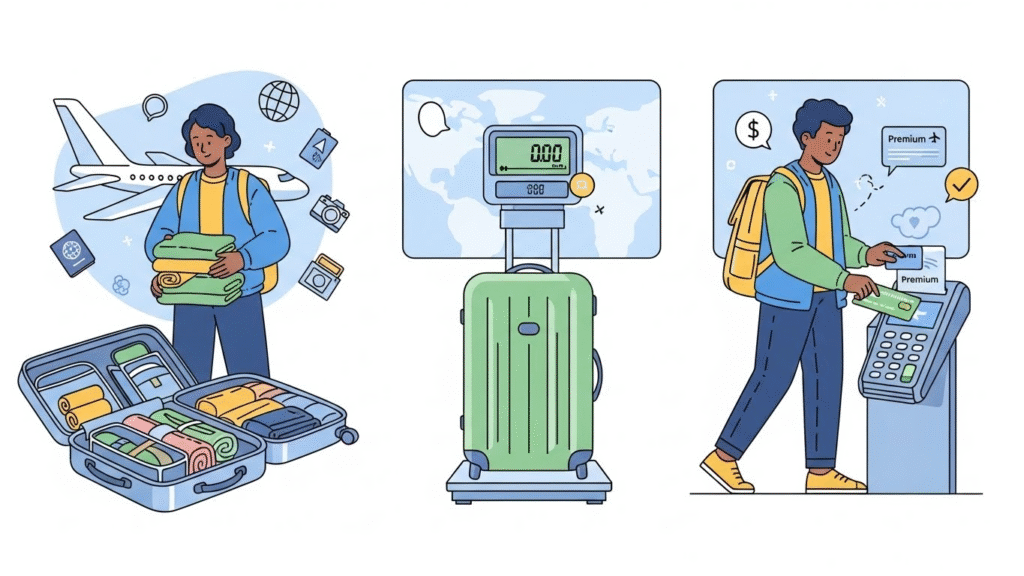
Save by paying before you get to the airportAir Canada allows baggage fees to be paid online at check-in, which is always cheaper than at the gate. If you are on a Basic fare and know you need to check a bag, do it at online check-in or at the counter — never wait for the gate.
Aeroplan Elite status: extra baggage allowances
| Status tier | Extra checked baggage benefit |
|---|---|
| Aeroplan 25K | 1 additional free checked bag on most routes |
| Aeroplan 35K | 1 additional free checked bag on most routes |
| Aeroplan 50K | 2 additional free checked bags on most routes |
| Aeroplan 75K / Super Elite 100K | 3 additional free checked bags on most routes |
| Qualifying Aeroplan co-branded credit card | 1 free first checked bag (card holder and companions on same booking) |
Elite members also retain their full carry-on allowance regardless of fare type, including on Economy Basic tickets.
Special situations worth knowing
Military personnel
Eligible active and retired Canadian and US military members may check up to three bags at up to 32 kg each, free of charge, on all Air Canada operated flights. Military ID must be presented at the check-in counter. Source: Air Canada — Checked Baggage
Infants
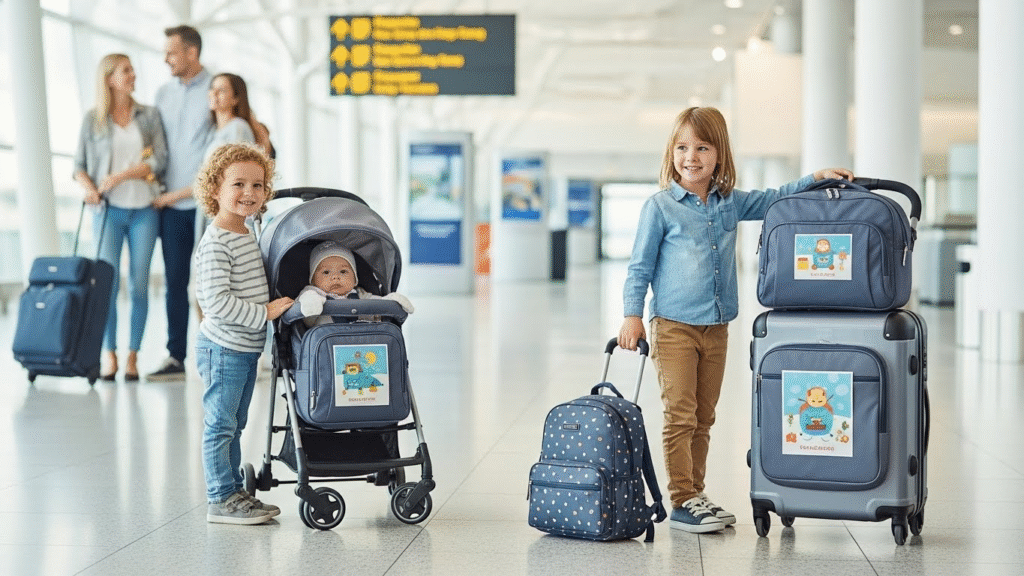
Infants travelling on a parent’s lap receive one additional carry-on item (for infant essentials) up to 55×40×23 cm free of charge. Up to two essential infant items — stroller, car seat, or playpen — may be checked free of charge regardless of fare type. These do not count toward the parent’s baggage allowance.
Sports equipment
Most sports equipment counts as one checked bag within your allowance. Overweight charges still apply if the item exceeds 23 kg on Economy tickets. Certain items have waived oversize fees (hockey bags, ski bags), but overweight fees still apply. Bicycles incur a flat fee of CAD/USD $50–$60 per direction with no further oversize or overweight charges if within the size and weight limit. Bicycles must be pre-registered at booking.
Musical instruments
Small instruments that fit within the carry-on size limit can be brought on board as the carry-on item. Larger instruments that do not fit must be checked, at which point standard checked baggage fees apply. A separate seat can be purchased for fragile instruments at a standard fare price.
How to confirm your exact allowance
Air Canada’s baggage rules have enough route-specific and fare-specific variations that the only fully reliable source is your own booking. Three ways to check:
- Your booking confirmation email — your baggage allowance is printed alongside your ticket details
- Air Canada’s checked baggage calculator at aircanada.com/baggage/checked — enter your route and fare type for an accurate result
- Retrieve booking on aircanada.com or the Air Canada app — your exact allowance is displayed under your trip details
Do not rely on any third-party guide (including this one) as the definitive number for your booking. Route exceptions, fare promotions, and recent fee changes mean the figure on your ticket is the only one that counts at check-in.
Frequently asked questions
What is Air Canada’s carry-on size limit?
55 × 40 × 23 cm (21.5 × 15.5 × 9 inches) for the carry-on bag, and 43 × 33 × 16 cm (17 × 13 × 6 inches) for the personal item. No weight limit, but the bag must be stowable in the overhead bin without assistance.
Does Air Canada charge for carry-on bags?
No, for most fares. Economy Standard, Flex, Comfort, Latitude, Premium Economy, and Business Class all include carry-on at no charge. Economy Basic passengers on North American routes (Canada, US, Mexico, Caribbean, Central America) are not permitted a carry-on — only a personal item — on tickets purchased after January 3, 2025.
What is the Air Canada checked bag weight limit?
23 kg (50 lb) in Economy. 32 kg (70 lb) in Premium Economy and Business Class. Economy bags between 23 and 32 kg are accepted for an overweight fee of approximately $100–$120 CAD/USD. No bag of any class may exceed 32 kg.
How much does Air Canada charge for a first checked bag?
On Canada-US routes: approximately CAD/USD $30 for most Economy fares. On international routes, Economy Basic fares pay $75–$90 CAD for the first bag. Economy Standard and Flex often include one free bag on international routes to Europe, Asia, and South America — check your booking to confirm.
What happens if I bring a carry-on bag on an Economy Basic fare?
On North American routes, it will be checked at the gate for CAD/USD $65 plus tax. This is higher than the standard counter fee of around $35. If you know you need to check a bag, do it at online check-in or at the airport counter to pay the lower rate.
Does Air Canada’s Economy Basic include a checked bag?
Not automatically on North American routes. You pay for any checked bags. On some international routes (Europe, Asia, South America), even Basic fares may include one checked bag — but this varies and must be confirmed on your specific booking.
Can I get a free checked bag on Air Canada?
Yes. Economy Comfort, Latitude, Premium Economy, and Business Class include free checked bags on all routes. Many international Economy Standard and Flex fares include one free bag. Aeroplan Elite Status members and qualifying Aeroplan credit card holders also receive free first checked bags regardless of fare type.
What is Air Canada’s baggage allowance in Business Class?
Two free checked bags at up to 32 kg each, plus two carry-on pieces within the standard cabin dimensions, plus a personal item. No checked bag fees apply in Business Class on any route.